Only 8% of businesses say their data is fully ready for AI at scale. Nearly two-thirds plan to increase their AI spending anyway.
Those findings, from a recent survey of 10,000 businesses across 32 countries, reveal an expensive mismatch. Companies are counting on AI agents to reduce support costs and make employees more productive. Yet they’re making those investments while acknowledging that their data isn’t fully prepared to support AI at scale.
For product builders, that can mean shipping an agent that sends customers through steps they’ve already tried or gives employees guidance that doesn’t fit the task. Users end up doing more work, support teams pick up the pieces, and the business keeps paying to run the agent.
Bad information gets more expensive when agents act on it
The same research shows how closely data readiness and AI returns are connected. Among businesses whose data is fully ready for AI, 81% report broad or strong ROI. That figure falls to 12% among those with partially ready data. Across all businesses surveyed, only 28% report broad or strong returns.
As companies give agents more responsibility, gaps in their information can become failures in the customer experience. An agent might know the instructions for completing a workflow while having no idea that the person asking for help has already followed them unsuccessfully. Repeating those instructions leaves the customer where they started, with another disappointing interaction to their name.
That experience has consequences well beyond a single conversation. Customers may stop using the agent or lose confidence in the product itself. Employees may return to familiar non-agentic processes. Businesses then have to fund both the AI capability and the human work needed to compensate for its shortcomings.

An agent needs to know who it’s helping
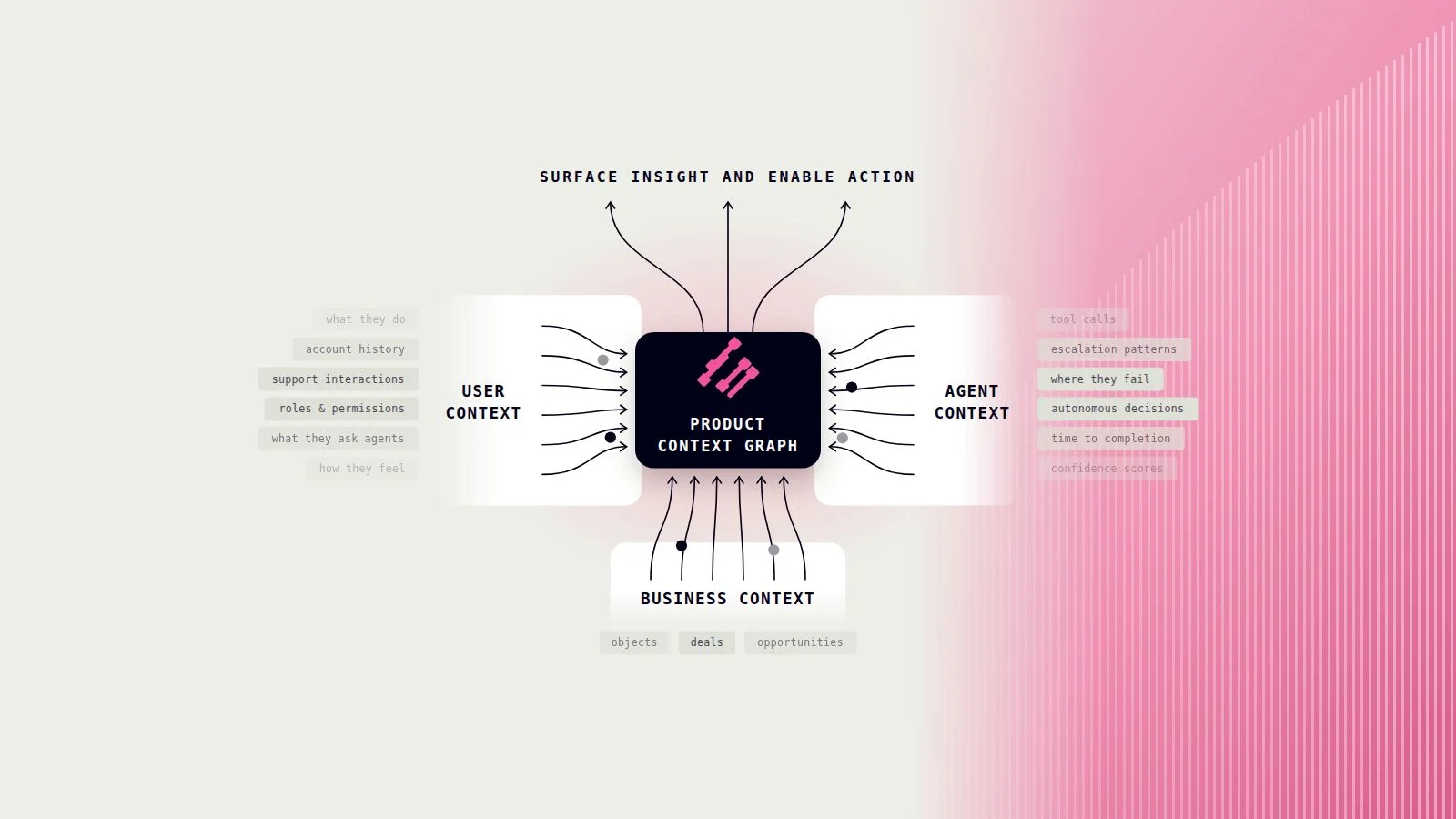
Product builders need to ground their AI in data about what users want to accomplish, how they use the product, and where they get stuck. That understanding helps teams decide which problems their agents should solve and give those agents the context to offer relevant help.
That includes the paths people take through a product, the features they use, and the places they abandon a task. Connected to the right user or account, those details help an agent distinguish between someone discovering a feature and someone who has been struggling with it for days.
Builders need that understanding, too. They can use it to identify where AI assistance could save people time and where an existing agent keeps falling short. Without that evidence, teams risk investing in capabilities that look impressive in a demo and contribute little to a customer’s working day.
The history behind those interactions also matters. With retroactive analytics, teams can investigate new questions using previously collected behavior. They don’t have to anticipate every future AI use case before they start gathering data.
As AI capabilities evolve, builders can revisit that history to understand workflows they hadn’t previously considered and establish how users completed tasks before an agent became involved. That gives them a basis for judging whether the new experience represents an improvement.

Connecting user understanding to AI returns
Pendo Product Analytics gives teams that view of user behavior, including the historical interactions they can explore as new questions arise. Pendo for Agents extends that understanding to the agents helping their customers.
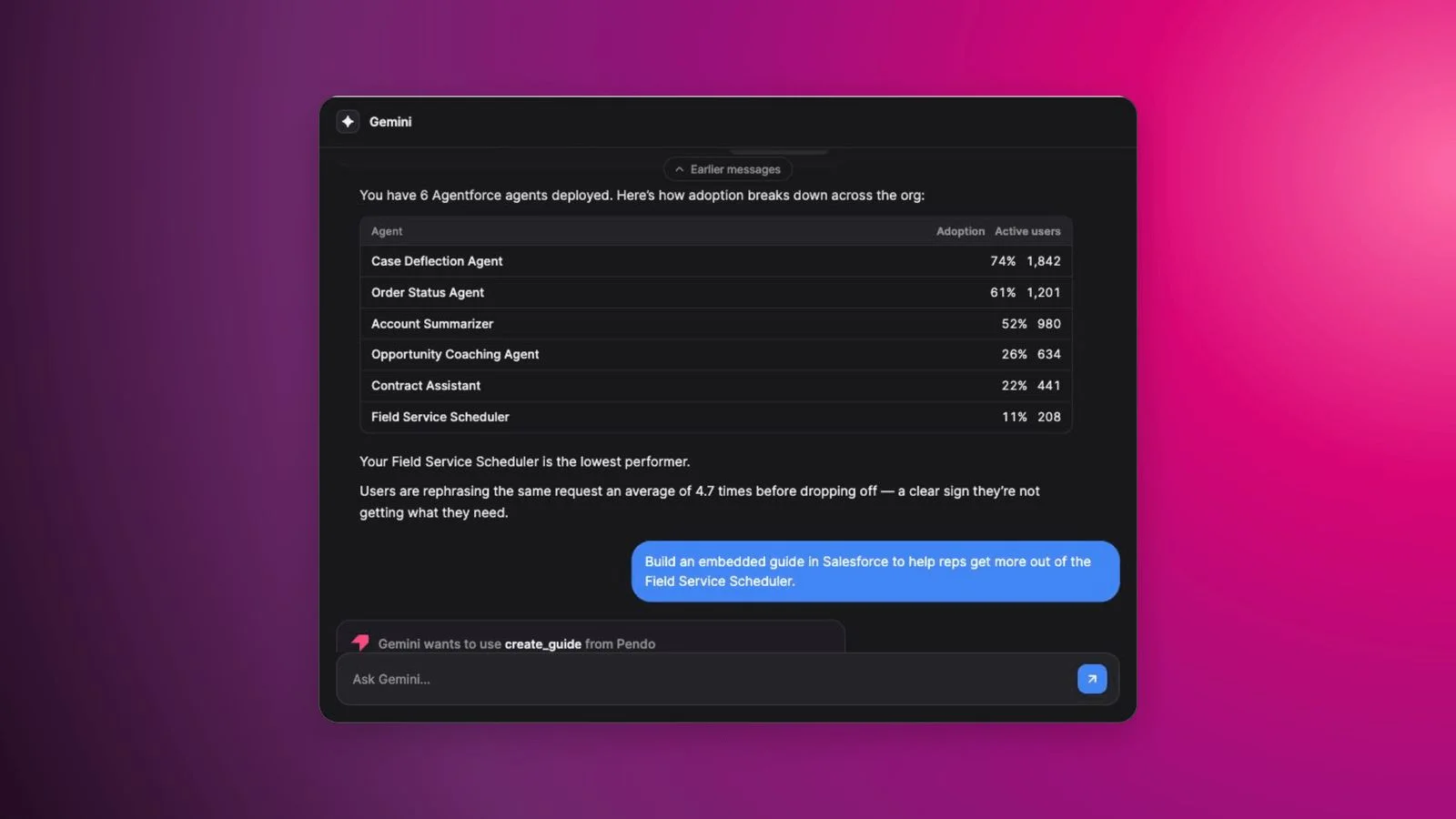
Agent Toolkit supplies relevant behavioral context so agents can tailor assistance to what a user has already done. Agent Analytics helps builders understand how people use those agents and where conversations break down. Through the Pendo MCP, builders can bring product insights into the AI tools where they’re already developing and improving software.
The point is to help people complete useful work and give businesses evidence that their AI investment is contributing to that outcome. A conversation ending doesn’t establish that a problem was solved. A customer who opens a support ticket after chatting with an agent is still waiting for the help the business promised. Builders need to understand what happened afterward, including whether the user completed the task or still needed help.
Businesses that want more from AI will need to know more about the people using it. The quality of that understanding will shape whether agents save customers and employees time, whether those users come back, and whether the business has a reason to keep investing.
To see firsthand how Pendo helps agents understand your users and offer more useful assistance, explore Pendo for Agents.