For SaaS revenue leaders, the mandate is clear: Grow your customers.
New logo acquisition is expensive and unpredictable. Boards now demand efficiency. The lever that matters most? Protecting the customers you already have so you don’t lose existing revenue, and expanding their account footprint further.
Revenue leaders know this. Which is why RevOps has spent years trying to put a score behind customer health, hoping to give go-to-market (GTM) teams the foresight to protect and grow accounts. The data collection is not the hard part, though; it’s turning this data into insights you can act on. This becomes even more difficult when, as in most organizations, data lives in silos across teams and tools and requires extensive preparation and cleaning before being used to model anything.
But here's the uncomfortable truth: Most customer health scoring initiatives fail. And they fail for predictable reasons.
Why traditional customer health scores fail
If your customer success team uses a health score today, you've probably seen the pattern: A customer looks healthy by the numbers, then churns anyway. Or an account gets flagged as at-risk, but the score can't tell your team why—or what to do about it.
Traditional health scoring breaks down in three predictable ways.
Static scoring models can't keep up:
Most health scores are built on assumptions made six or twelve months ago—what "good" engagement looked like back then. But product usage patterns evolve. Features get added. User behavior shifts. A static model that worked at launch becomes a lagging indicator within months, telling you what happened rather than what's about to happen.
The data lives in silos
Product usage data sits in one system. CRM data in another. Support tickets in a third. Building a unified view of customer health requires stitching together data sources that were never designed to talk to each other—a process that requires data engineering resources most RevOps teams don't have.
Scores without actions are just numbers
Even when a health score correctly identifies risk, it often fails to answer the two questions that matter: Why is this account at risk? And what should we do about it? A red score without context leaves CSMs guessing, which means inconsistent playbook execution at best and paralysis at worst.
The result is a familiar frustration: dashboards full of health scores that nobody trusts, that don't explain themselves, and that rarely translate into action before it's too late.
The real cost of manual churn analysis
When automated health scoring falls short, teams fall back on manual churn analysis—CSMs digging through individual accounts, looking for warning signs in product usage data, support tickets, and renewal timelines.
This approach works, to a point. Experienced customer success managers develop pattern recognition over time. They learn to spot the subtle signals: a power user who stops logging in, a team that abandons a key feature, an executive sponsor who goes quiet.
But manual analysis doesn't scale. With 50, 60, sometimes 100 accounts in their portfolio, there's no way for a single CSM to catch everything. By the time they spot the signals, it's often too late—the renewal conversation has already turned adversarial, or the upsell window has closed.
The opportunity cost compounds over time. Every hour spent manually reviewing accounts is an hour not spent on proactive relationship-building, strategic planning, or high-value customer conversations. Manual churn analysis becomes a tax on your highest-performing team members—precisely the people whose time should be spent on work that only humans can do.
What AI churn prediction actually requires
AI-powered churn prediction has been promised for years. So why hasn't it delivered?
The answer lies in understanding what a useful churn prediction system actually requires—and why most approaches fall short.
It starts with behavioral data
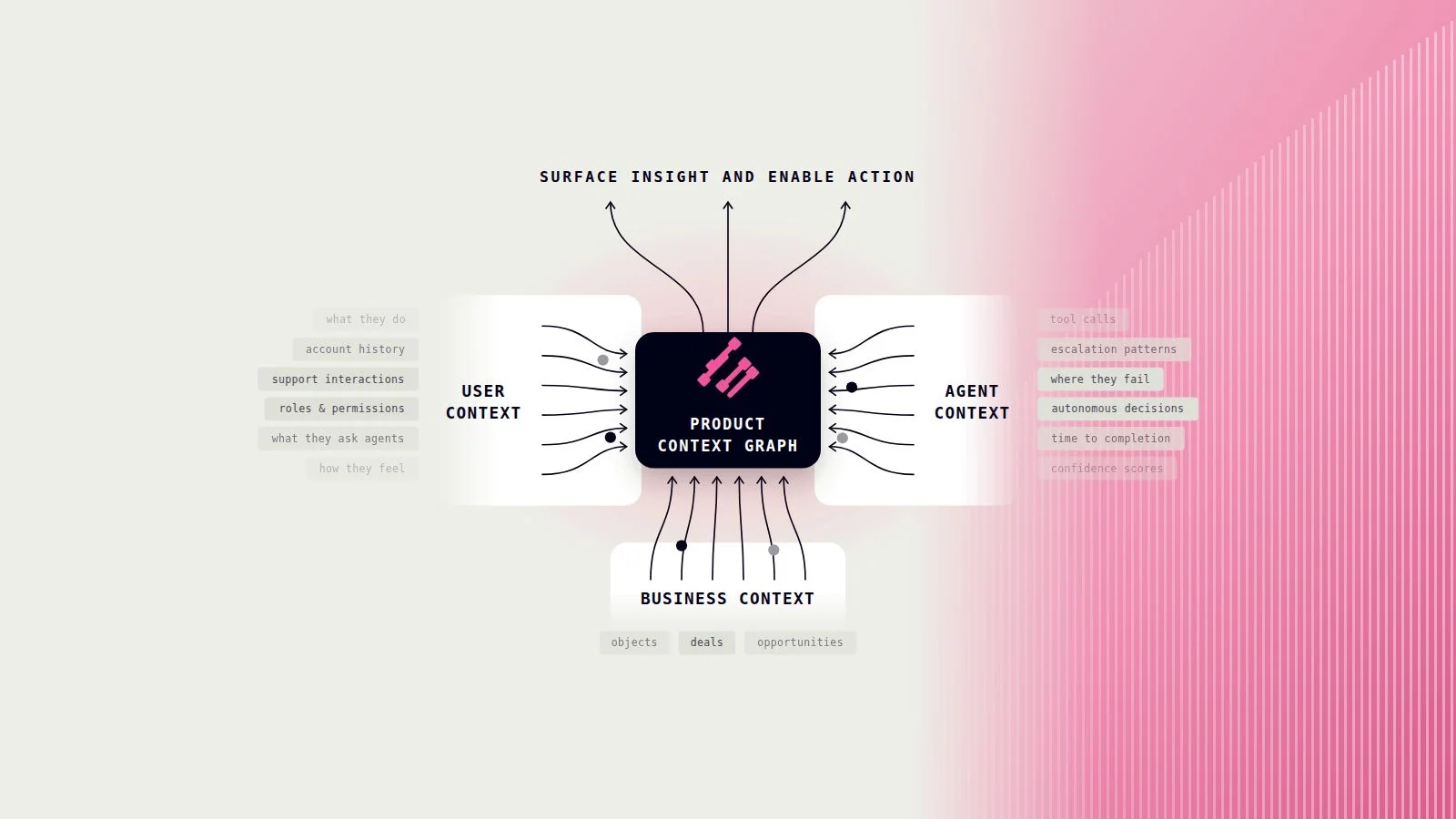
The strongest churn signals don't come from CRM fields or survey responses. They come from what users actually do inside your product: features they use (or stop using), patterns of engagement over time, and subtle shifts in behavior that precede disengagement.
Product usage data is the leading indicator. Everything else—support tickets, NPS scores, renewal conversations—is a lagging indicator that confirms what behavioral data already revealed weeks or months earlier.
Models must continuously retrain
A model built on last year's churn patterns will miss this year's risks. Customer behavior evolves as your product changes, as market conditions shift, and as your customer base matures. Effective AI churn prediction requires models that learn continuously from new data, not one-time builds that decay over time.
Predictions need explanations
A churn risk score without context creates more problems than it solves. "This account is 73% likely to churn" tells your team nothing about why—and without the why, they can't act intelligently. The best churn prediction systems surface not just predictions, but the specific behaviors and patterns driving each prediction.
Insights must reach the right people at the right time
A prediction buried in a dashboard that CSMs check weekly isn't a prediction that drives action. The intelligence needs to flow into the systems where revenue teams already work—CRM, Slack, wherever the actual work happens—with enough context to make action immediate and obvious.
Most "AI churn prediction" solutions fail on at least one of these dimensions. They rely on CRM data instead of behavioral data. They build static models that degrade over time. They deliver scores without explanations. Or they require teams to adopt yet another dashboard that sits unused.
Manual processes and half-baked solutions don't cut it
Customer success managers (CSMs) do their best with the tools they’re given by RevOps. It may mean using manual static scoring models in spreadsheets that don’t give reps context around why an account has the health score it has. In other cases, RevOps may create custom data science projects to gauge customer health. But these become slow, resource-heavy, and difficult to deliver insights from to reps directly.
The result? A bunch of manual processes and half-baked solutions. New kick-offs, resets, failed projects… always the same ending. Even those forward-thinking CSMs already digging into Pendo data to spot account signals may find it difficult to scale their work. With 50, 60, sometimes 100 accounts in their portfolio, there’s no way for a CSM to catch everything. By the time they spot the signals, it’s too late: The renewal is lost, or the upsell window has passed.

How Pendo Predict turns product data into action
Pendo Predict approaches churn prediction differently—starting from the recognition that useful predictions require both rich behavioral data and a path to action.
Here's how it works:
Connect your data sources
Predict integrates with your CRM and product usage data—whether that usage data comes from Pendo's analytics or another platform. Pendo's behavioral data flows natively, but you can also bring data from product analytics tools you're already using.
Let AI build and maintain the model
Rather than requiring you to define what "healthy" looks like, Predict identifies behavioral patterns that preceded past churns and renewals, then looks for those signals across your current customer base. The model continuously retrains on new data, so predictions stay accurate as customer behavior evolves.
Deliver predictions where work happens
Risks and expansion opportunities flow directly into Salesforce and Slack, enriched with the specific signals driving each prediction. Your team sees not just who is at risk, but why—and what playbooks have worked for similar accounts.
Guide the next action with Recommended Actions
With Pendo's Recommended Actions embedded directly in your CRM, reps aren't just told who to focus on—they're shown exactly what to do next. Each recommendation is based on playbooks proven to work for accounts with similar risk profiles. The prediction becomes the starting point for action, not an end in itself.
Scale engagement with Predictive Segments
Predict doesn't stop at alerting individual reps. With Predictive Segments, you can build dynamic customer segments based on risk level—then automatically trigger in-app messages, email sequences, or other engagement journeys to reach at-risk users before they disengage. It's proactive retention at scale, without requiring manual intervention for every account.
Why this approach to churn prediction is different
Customer health scoring has been tried before. Predictive analytics isn't new. So what makes this approach different?
The data is different
Most health scoring relies on CRM data, support tickets, and survey responses—all lagging indicators. Predict starts with product usage behavior, the leading indicator that reveals risk weeks or months before traditional signals surface.
The delivery is different
Predictions that live in dashboards don't drive action. Predict delivers intelligence directly into Salesforce opportunity records and Slack channels, so insights reach the right people when decisions are being made.
The activation is different
A score isn't a strategy. Predict doesn't just tell your team who's at risk—it shows them what to do next with Recommended Actions, and scales proactive engagement through Predictive Segments. The full loop from prediction to action to outcome is built into the platform.
The combination—behavioral data, continuous learning, explainable predictions, and in-workflow delivery—addresses why previous approaches to customer health scoring failed. It's not just about building a better model. It's about building a system that actually drives action.
From prediction to action
For revenue leaders, the question isn't whether you need better customer health insights. You already know you do. The question is whether another initiative will actually change how your team operates.
Pendo Predict is designed to answer that question—to turn predictions into actions, and actions into protected and expanded revenue.
No more vague health scores. Just clear signals, rooted in real usage data, delivered where your teams already work.
Ready to see how Pendo Predict can transform your churn reduction efforts? Get a demo here.