DEEP DIVE - 11 min read
What is change management?
Change management is a structured approach to transitioning individuals, teams, and organizations from the current state of how they engage, work, and operate to a desired future state. It involves planning, implementing, and monitoring changes to minimize resistance and maximize adoption and effectiveness of a new program, product, process, or feature.
Table of Contents
As software becomes more central to how employees work, change management has become increasingly synonymous with managing digital change, specifically with digital adoption of new applications and cross-application workflows critical to success.
Why is change management important?
Change is inevitable in any organization, and managing change effectively is crucial if a business is to adapt to a changing market and an increasingly digital workplace. However, navigating change without a structured approach can have significant negative consequences.
Organizations with poor change management practices often see significant cost overruns on their change initiatives, if not outright failure of those projects (and even loss of sales and market credibility). Resistance, confusion, and frustration can quickly snowball, affecting everything from employee morale to financial performance. Consider a large retail chain implementing a new inventory management system without proper communication or training. Confused employees struggling to use the latest software can lead to inaccurate stock levels, order delays, and frustrated customers — ultimately resulting in lost sales and damage to the brand’s reputation.
Change management ensures that changes — large or small — are implemented smoothly, with minimal disruption, and that individuals and teams are adequately prepared and supported throughout the process.
What are the key objectives of change management?
The key objectives of change management include:
- Minimizing resistance to change: Employees naturally resist change due to fear of the unknown, potential job insecurity, or a disruption to established routines. To address this, you’ll want to communicate clearly and early, encourage employee involvement in the change process, and anticipate and prepare for user anxieties.
- Maximizing the adoption and acceptance of change: To embrace the change, users must understand and feel comfortable with the new system or process. To ensure this acceptance, design user-friendly interfaces and provide comprehensive, ongoing support that includes in-app guides and other self-service assistance to empower users to succeed.
- Minimizing disruptions to business operations: The goal is to transition smoothly without hindering ongoing work. Create and follow a clear communications plan to inform users before, during, and after the implementation about the change, its impact, and resources available for support. As mentioned before, anticipate challenges during the rollout and have contingency plans ready if they happen. For large-scale changes, consider phased rollouts so users have time to adjust.
- Accelerating the pace of change implementation: Timely implementation minimizes uncertainty and allows employees to reap the benefits of the change sooner. To streamline things, identify and remove any bureaucratic hurdles and unnecessary or redundant tasks. Empower employees who are enthusiastic about the change to act as advocates and support their colleagues. Above all, leverage available technology, including communication and digital adoption platforms, to deliver information and training materials efficiently.
- Optimizing the benefits and outcomes of change initiatives: Effective change management is an ongoing process that should be one of continuous improvement. Measure your success by establishing key performance indicators (KPIs) to track the effectiveness of the change and identify areas for improvement. Solicit ongoing feedback from employees to gauge their experience. For both KPIs and feedback you collect, be prepared to make adjustments to ensure the change ultimately achieves its intended goals.
What are the benefits of change management?
Effective change management isn’t just about rolling out new software and features. It’s about making those things successful and sustainable within the organization. Here are some compelling benefits of a well-defined change management strategy:
- Increased efficiency: Smoothly implemented changes can streamline workflows, eliminate redundancies, and improve productivity.
- Enhanced innovation: A culture that embraces change fosters creativity and encourages the exploration of new ideas and solutions.
- Improved employee satisfaction: When employees understand the reasons for change and are involved in the process, they are more likely to be supportive and engaged.
- Better adaptability to market changes: Organizations that adapt quickly to market shifts and evolving customer needs gain a competitive advantage.
- Reduced costs: Effective change management can minimize disruptions and setbacks, leading to cost savings in the long run.
All these benefits help ensure your organization is well-equipped to navigate change smoothly and effectively, ultimately achieving your desired future state.
What are the stages of the change management process?
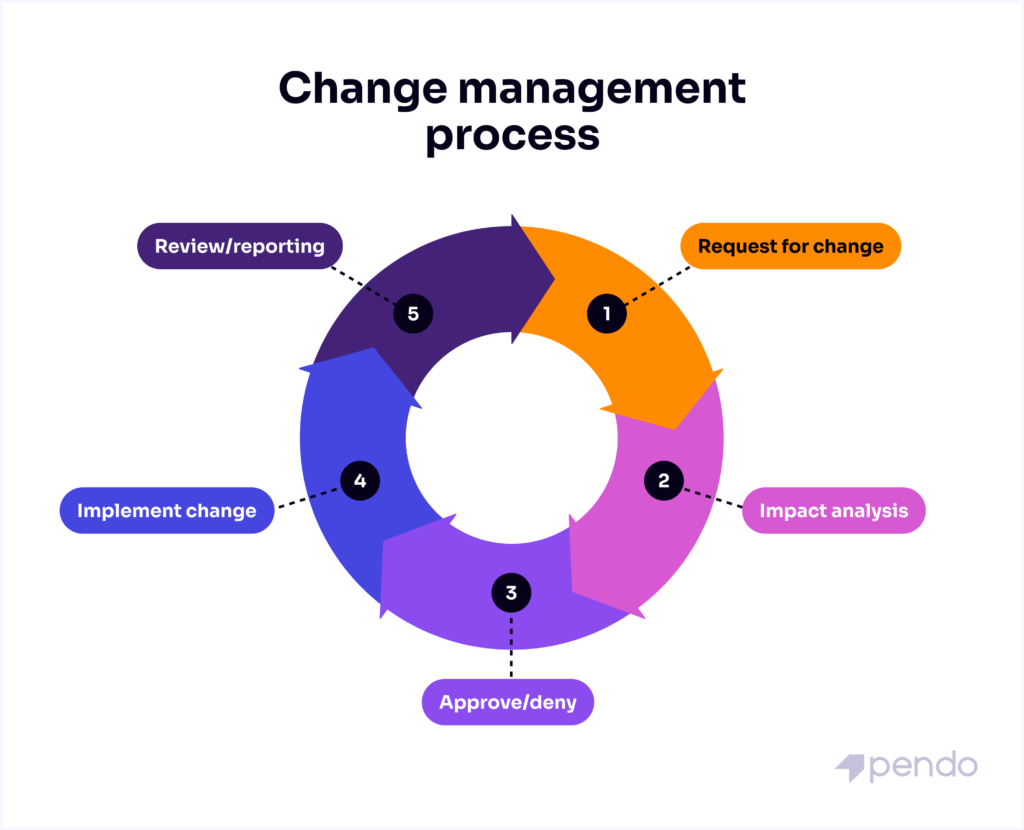
A structured change management process guides the transition from the current state to the desired future state. Here’s a breakdown of the key stages, incorporating best practices for a smooth and successful journey:
1. Planning: Identifying the need for change, defining objectives, and creating a change management plan:
- Define clear goals: Outline the specific objectives the change aims to achieve to measure success effectively.
- Identify stakeholders: Pinpoint everyone impacted by the change, including employees, managers, customers, and external partners.
- Conduct risk assessments: Proactively identify potential challenges and develop mitigation plans.
2.Communication: Informing stakeholders about the change, addressing concerns, and ensuring clarity of purpose
- Tailored communication plans: Craft clear, concise messages to target and address the concerns and interests of different stakeholder groups.
- Transparency is key: Be open and honest about the change, its timeline, and its rationale.
- Utilize multiple channels: Leverage various communication channels like town halls, emails, and internal communication platforms to reach everyone effectively.
3. Preparation: Assessing the impact of change, identifying risks, and developing strategies to mitigate them
- Invest in training: Equip employees with the knowledge and skills needed to utilize the change effectively through comprehensive training programs, including in-app guides and support.
- Allocate resources: Secure the resources needed, such as budget, technology, and personnel, to support the change implementation.
- Develop contingency plans: Anticipate potential roadblocks and develop alternative strategies to address them promptly.
4. Implementation: Executing the change plan, monitoring progress, and making adjustments as necessary
- Monitor progress: Track progress against established goals and identify areas where adjustments might be necessary.
- Embrace flexibility: Be prepared to adapt your approach based on real-time feedback and unforeseen challenges.
- Address issues proactively: Address problems swiftly and transparently to maintain employee confidence.
5. Reinforcement: Consolidating the change, celebrating successes, and embedding new behaviors and practices
- Promote new behaviors: Encourage and recognize the adoption of new behaviors and workflows aligned with the change initiative.
- Celebrate successes: Acknowledge milestones and achievements to maintain momentum and employee engagement.
- Continuous improvement: Establish feedback mechanisms to gather input and identify areas for continuous improvement to ensure the sustainability of the change.
By following these steps and best practices within each stage, organizations can ensure a well-planned, well-communicated, and well-supported transition, maximizing the positive impact of change initiatives.
What are the common change management models?
There are several change management models, including:
- Lewin’s Change Management Model:
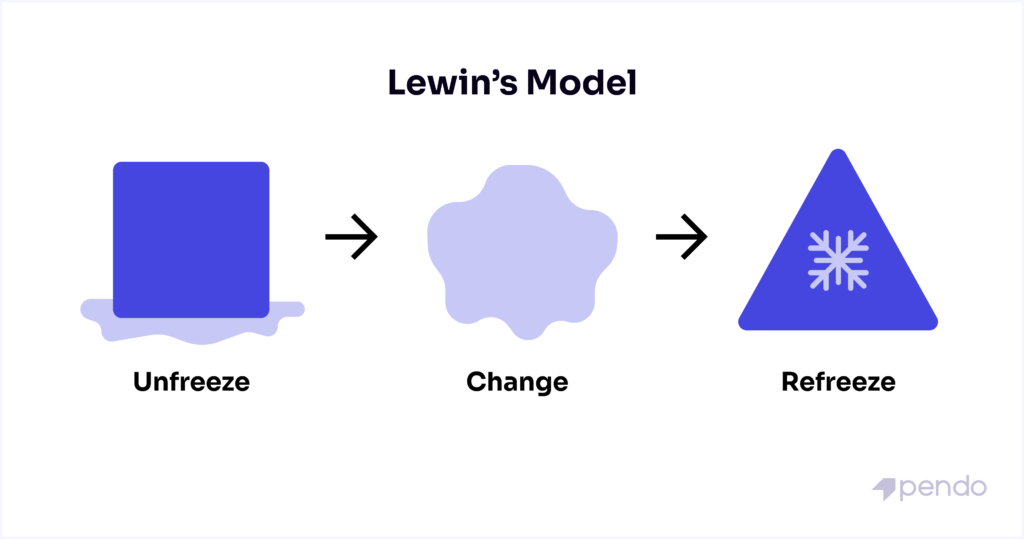
- This model, developed by Kurt Lewin, emphasizes the need to address resistance and create stability after change. To do so, it proposes a three-stage process: unfreeze (prepare for change by analyzing the current state), change (implement the new approach), and refreeze (solidify the change as the new normal). This model is well-suited for addressing relatively simple or well-defined changes.
- Kotter’s 8-Step Change Model:
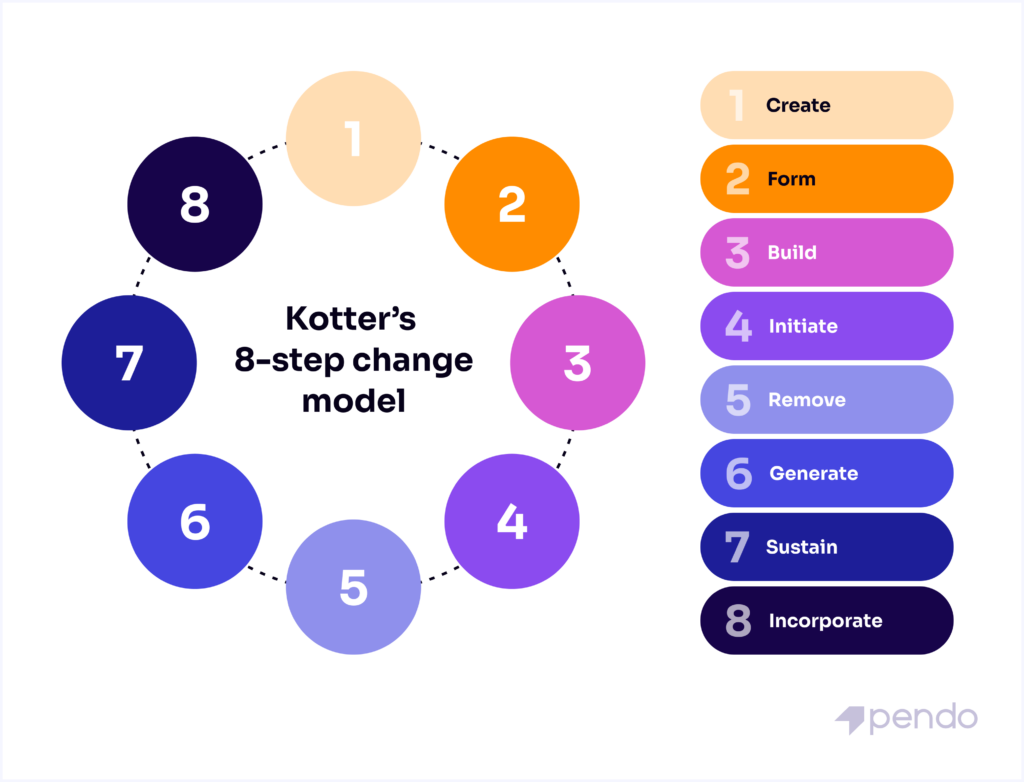
- Developed by John Kotter, this model provides a more comprehensive step-by-step approach to change. It outlines eight key steps for leading successful change, including creating a sense of urgency, building a guiding coalition, developing a vision for change, empowering action, and anchoring the change in the organization’s culture. This model is valuable for complex, organization-wide changes.
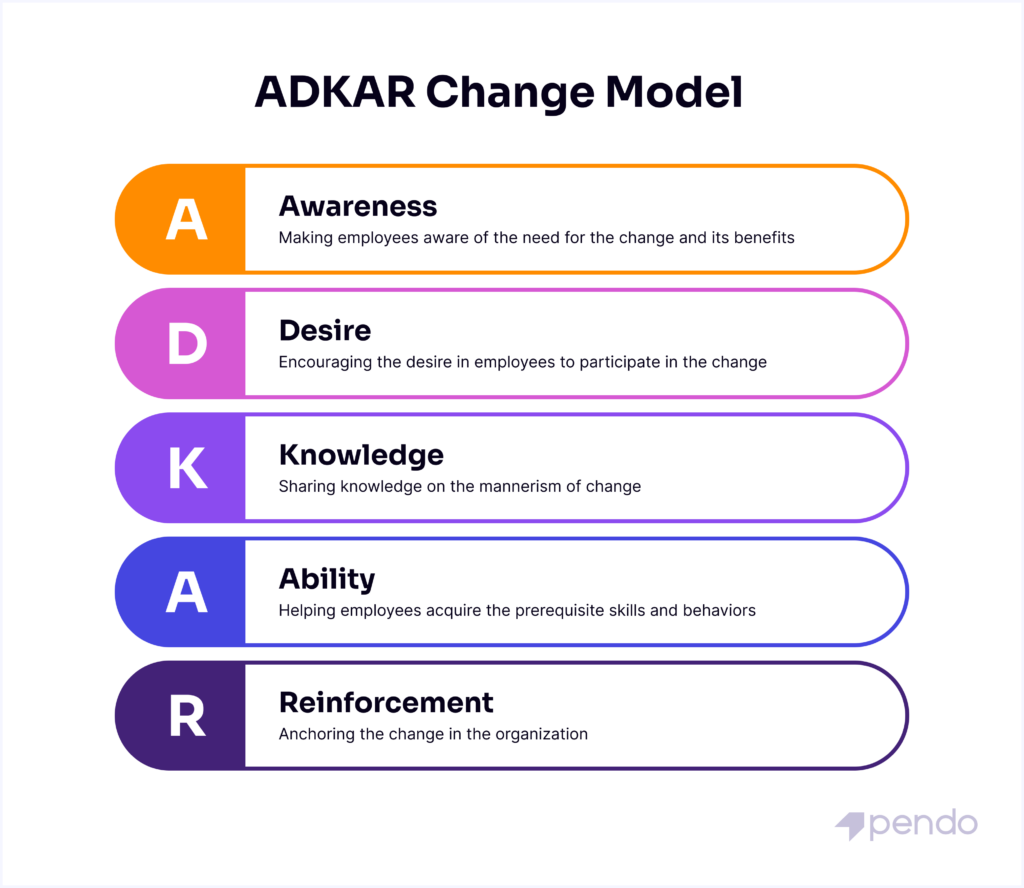
- ADKAR Model:
- This model focuses on individual change, highlighting five elements essential for successful change adoption. These include awareness (of the need for change), desire (to participate in the change), knowledge (of how to implement the change), ability (to put the knowledge into practice), and reinforcement (to sustain the change over time). This model is particularly useful for initiatives requiring significant employee behavioral changes.
What is resistance to change?
Resistance to change refers to the reluctance or opposition exhibited by individuals or groups when faced with a change. It can manifest in various forms, such as skepticism, fear, or a desire to maintain the status quo. Understanding and addressing resistance is crucial for successful change management.
How can resistance to change be managed?
Managing resistance to change requires a proactive and empathetic approach. Strategies to address resistance include:
- Effective communication: Clearly communicate the reasons, benefits, and impacts of the change, addressing concerns and answering questions
- Involvement and participation: Involve employees in the change process, seeking their input and feedback to increase ownership and commitment
- Education and training: Provide training and resources to develop the skills and knowledge required to adapt to the change
- Change champions: Identify and empower change champions within the organization who can advocate for the change and help address resistance
- Incentives and rewards: Recognize and reward individuals and teams that embrace and support the change, reinforcing positive behaviors
What is a change agent?
A change agent is an individual or group responsible for leading and facilitating the change management process. Change agents can be internal or external to the organization and play a critical role in guiding the change, engaging stakeholders, and driving the implementation of change initiatives.
What is a change management plan?
A change management plan is a document that outlines the strategy, activities, and resources required to manage a specific change initiative. It typically includes an assessment of the current state, goals and objectives, stakeholder analysis, communication plan, training and support strategies, and a timeline for implementation.
Pendo can help with your change management at scale for your employees
What is a stakeholder analysis?
A stakeholder analysis is a process of identifying and assessing the individuals, groups, or organizations that will be affected by a change. It helps understand their interests, influence, and potential reactions to the change, enabling the development of targeted communication and engagement strategies.
What is the role of leadership in change management?
Leadership plays a critical role in change management. Effective leaders provide vision, inspire and motivate employees, and create a supportive environment for change. They set clear expectations, communicate the need for change, and actively support and sponsor change initiatives.
What is the difference between change management and project management?
While change management and project management are related, they serve different purposes. Project management focuses on the planning, execution, and control of specific projects to achieve predefined objectives, while change management is concerned with managing the people side of change, addressing resistance, and ensuring successful adoption of change across projects and initiatives.
What are the key success factors for change management?
Key success factors for change management include:
- Strong leadership and sponsorship
- Effective communication and engagement
- Employee involvement and participation
- Adequate training and support
- Clear goals and objectives
- Flexibility and adaptability
- Continuous monitoring and evaluation
- Celebrating and reinforcing successes
How long does change management take?
The duration of change management can vary depending on the complexity and scope of the change. Some changes may take weeks or months, while others can span several years. It is essential to allocate sufficient time for planning, execution, and reinforcement to ensure successful change implementation.
What is resistance management?
Resistance management refers to the process of identifying, understanding, and addressing resistance to change. It involves proactive measures to mitigate resistance, such as effective communication, involvement, education, and addressing individual concerns to increase the likelihood of successful change adoption.
What is a change readiness assessment?
A change readiness assessment is a process of evaluating an organization’s or individuals’ preparedness for change. It involves assessing factors such as organizational culture, leadership support, employee engagement, and capacity for change to identify potential barriers and develop strategies to address them.
In order to conduct a thorough and accurate change readiness assessment, companies are increasingly leveraging product and process analytics in order to understand the current state and flow of work. They do this in order to understand how employees actually engage with software and the processes that run on it vs. merely assuming that employees are behaving in the ways expected.
How do companies use digital adoption solutions to manage change effectively?
The analytics capabilities the best digital adoption solutions offer are key to measuring and understanding the current state of work. With the power of these analytics, managers can come to insights that identify areas of the app to reconfigure, change, or create enablement for. They can understand how power users use the product in order to get other users to the same point.
The right digital adoption solution also offers the ability to easily create and deploy in-app and cross-app walkthroughs to guide users through ideal behaviors and workflows, as well as comprehensive feedback management to make sure users feel heard and supported throughout the change process.
What are the benefits of using a digital adoption solution to drive successful change?
When leveraged effectively, key benefits of using a digital adoption solution as part of a change management plan include:
- Increased user retention/decreased user churn – Digital adoption solutions equip employees and customers with the knowledge and skills they need to succeed with new technologies quickly and easily, reducing frustration and increasing confidence, leading to higher retention rates.
- Increased user satisfaction – Digital adoption solutions provide contextual in-app guidance and support, allowing users to learn and work efficiently without needing to constantly seek help. This reduces stress and builds a sense of accomplishment, leading to greater satisfaction.
- Greater user productivity – Digital adoption solutions automate repetitive tasks and streamline workflows, freeing employees’ time to focus on higher-value activities. Additionally, by ensuring everyone is using the software effectively, the solution minimizes wasted time and effort.
- Lower IT and customer support costs – Digital adoption solutions empower users to self-serve by providing readily available resources and guidance within the software. This reduces the burden on IT and customer support teams, allowing them to focus on more complex issues and strategic initiatives.
What is the role of communication in change management?
Communication is a vital component of change management. Effective communication helps create awareness, build understanding, address concerns, and foster engagement and buy-in from stakeholders. It should be clear, timely, transparent, and tailored to the needs of different audiences throughout the change process.
Companies can leverage the in-app guidance of a digital adoption solution to keep users up to speed on the pace of change and what developments to expect when. What’s more, communication is a two-way street. The same solution that change management teams use to send notices to users can be used to solicit communication from employees about how change is going—what’s working well, what needs to be changed, and what to prioritize in the change roadmap.
What is the difference between proactive and reactive change management?
Proactive change management involves anticipating and planning for future changes, proactively identifying opportunities, and implementing changes in a planned and strategic manner. Reactive change management, on the other hand, is a response to unexpected events or crises, requiring quick decision-making and action to address the situation.
What is a change control process?
A change control process is a formalized procedure for managing and documenting changes to a project, system, or organization. It involves evaluating change requests, assessing their impact, and making informed decisions on whether to approve, reject, or modify the proposed changes. The change control process ensures changes are properly assessed and managed to minimize risks and maintain project or organizational integrity.
What is the role of training and development in change management?
Training and development play a crucial role in change management by equipping employees with the knowledge, skills, and competencies required to adapt to and support the change. Training programs may include workshops, seminars, e-learning modules, or on-the-job training to enhance individual and team capabilities during the change process.
Companies looking to automate and deploy training at scale to users are increasingly leveraging digital adoption solutions, the capabilities of which allow for segmented, customized training and onboarding that users can access in the app itself, whenever is convenient for them. Unlike traditional onboarding and training methods, digital adoption solutions allow users to access the material they need at any point, so there is no risk of a user forgetting what they’ve learned or getting stuck due to lack of context or knowledge.
What is the sustainability of change?
The sustainability of change refers to the long-term ability of an organization or individuals to maintain and embed the desired changes beyond the initial implementation phase. It involves reinforcing new behaviors, monitoring progress, providing ongoing support and resources, and integrating change into the organization’s culture and processes to ensure lasting impact.
What is the role of feedback and evaluation in change management?
Feedback and evaluation are essential components of change management. They provide insights into the effectiveness of change initiatives, identify areas for improvement, and help measure progress towards desired outcomes. Regular feedback and evaluation allow for adjustments and course corrections throughout the change process to ensure optimal results. Companies undertaking change management today frequently turn to digital adoption solutions as a central source of truth for collecting and managing employee and user feedback.
What is change saturation?
Change saturation refers to a state where individuals or organizations experience an excessive amount of change simultaneously or within a short period. It can lead to change fatigue, decreased productivity, and increased resistance. Managing change saturation involves prioritizing and sequencing changes, providing adequate support, and allowing time for individuals and systems to adjust and adapt.
What is the role of technology in change management?
Technology can play a significant role in change management by facilitating communication, collaboration, and the implementation of change initiatives. Tools such as digital adoption solutions can streamline change processes, enhance engagement, and support virtual or geographically dispersed teams during change implementation.
What is the role of organizational change culture?
Organizational change culture refers to the collective attitudes, values, and behaviors within an organization regarding change. A positive change culture fosters openness, adaptability, and a willingness to embrace and support change. It is cultivated through leadership, communication, employee engagement, and consistent reinforcement of desired change behaviors.
What is change fatigue?
Change fatigue refers to a state of exhaustion or weariness experienced by individuals or organizations as a result of frequent or prolonged exposure to change. It can lead to decreased motivation, increased resistance, and a decline in performance. Managing change fatigue requires prioritizing changes, providing adequate support and resources, and ensuring a balance between stability and change.
What is the role of risk management in change management?
Risk management in change management involves identifying, assessing, and mitigating potential risks and uncertainties associated with the change. It helps anticipate and address potential barriers, develop contingency plans, and ensure the smooth implementation of change initiatives while minimizing disruptions and negative impacts.
What is the role of organizational learning in change management?
Organizational learning is the process of acquiring, sharing, and applying knowledge within an organization. In change management, organizational learning involves capturing lessons learned, identifying best practices, and leveraging previous change experiences to enhance future change initiatives. It promotes continuous improvement, adaptability, and the ability to effectively manage change.
A product experience platform makes it easy to have a single source of truth for organizational learning, in the form of a Resource Center or other centralized repository for knowledge management.
Where can I learn more about change management?
Pendo has published resources on the KPIs change management teams should track in the digital workplace and the importance of the right digital adoption solution for driving effective change management.