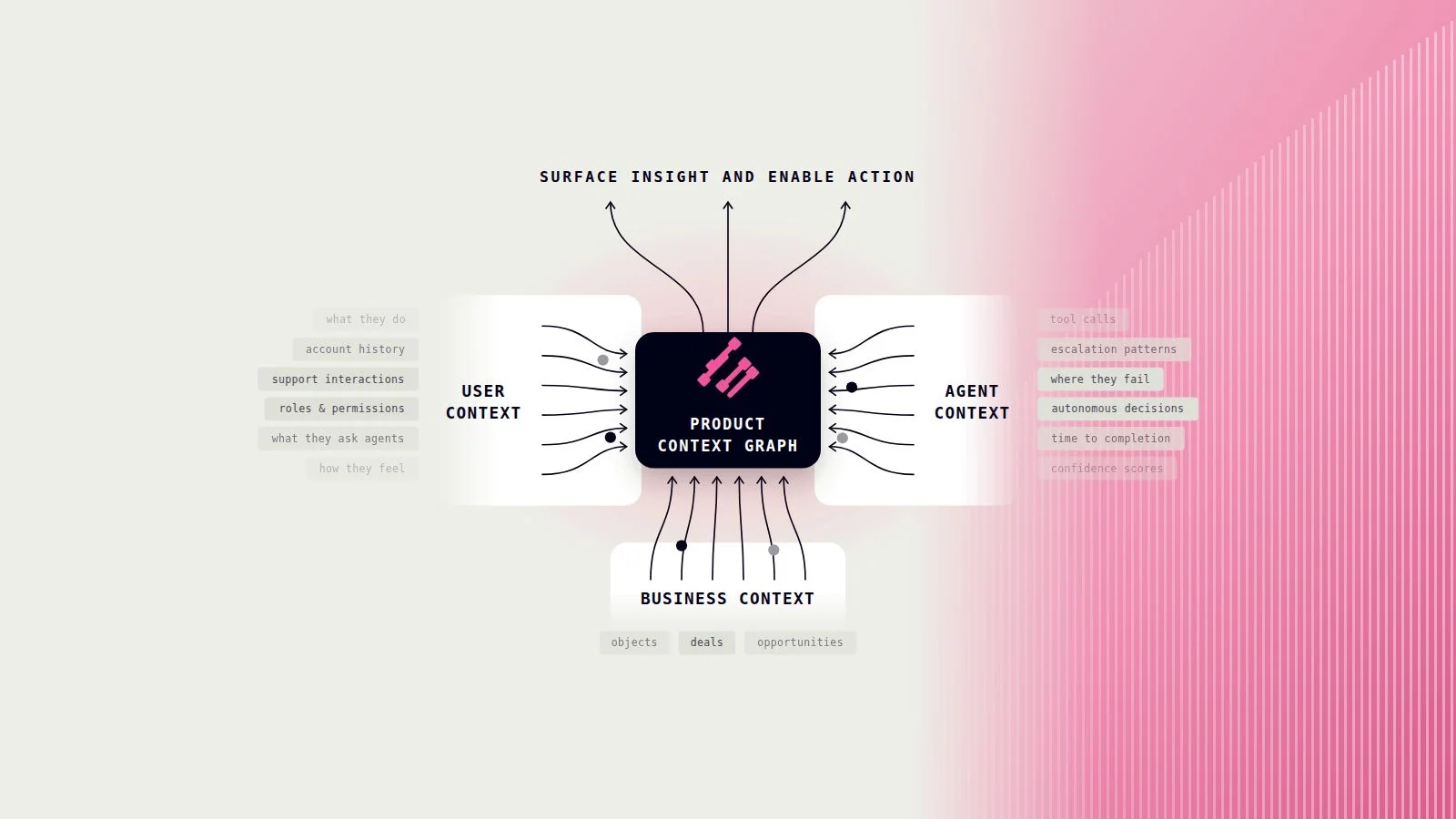
Hier ist etwas, über das kaum jemand spricht, wenn es um den Einsatz von Agenten geht: Meistens fehlt ihnen der Kontext, den sie brauchen, um wirklich nützlich zu sein.
Ihre Agenten sind wahrscheinlich mit Ihrer Wissensdatenbank oder sogar Ihrem CRM verbunden, aber wenn sie keine Ahnung haben, was Ihre Nutzer tatsächlich tun – wo sie Frustration erleben, wo sie abspringen oder wo sie immer wieder auf Bezahlschranken stoßen – riskieren Sie, Chancen zu verpassen oder sie sogar zur Abwanderung zu treiben.
Und genau deshalb haben wir uns mit Fin zusammengetan. Weil wir einen besseren Weg nach vorne gesehen haben; einen, bei dem Support-Agenten Kontext darüber haben, wer Ihre Nutzer sind und wie sie sich in Ihrem Produkt verhalten. Mit unserer nativen MCP-Integration gibt Pendo Fin Echtzeit-Einblick in das, was Nutzer tatsächlich in Ihrem Produkt tun – und die Möglichkeit, proaktiv zu handeln, bevor ein Nutzer überhaupt ein Ticket einreicht.
Warum „KI-gestützter Support" bisher meist das Ziel verfehlt hat – bis jetzt
Das Versprechen von KI im Customer Success hat sich immer auf drei Dinge konzentriert:
- Probleme früher erkennen
- Personalisierung in großem Maßstab
- Ihr Team auf hochwertige Arbeit fokussieren
Die Realität war ein nur geringfügig intelligenteres Ticketsystem – und der Grund ist einfach.
Support-KI arbeitet auf Basis dessen, was Nutzer sagen, nicht was sie tun. Und Nutzer sind notorisch schlecht darin, das eigentliche Problem zu artikulieren. Wenn sie sagen: „Diese Funktion funktioniert nicht", meinen sie eigentlich: „Ich habe versucht, diesen Workflow fünfmal abzuschließen, ich verstehe die Benutzeroberfläche nicht, und ich bin kurz davor aufzugeben und zu kündigen."
Produkt-Verhaltensdaten sagen Ihnen das Zweite. Aber bis jetzt gab es keinen sauberen Weg, diese Verhaltenssignale in Echtzeit in Ihren Support-Agenten zu übertragen.
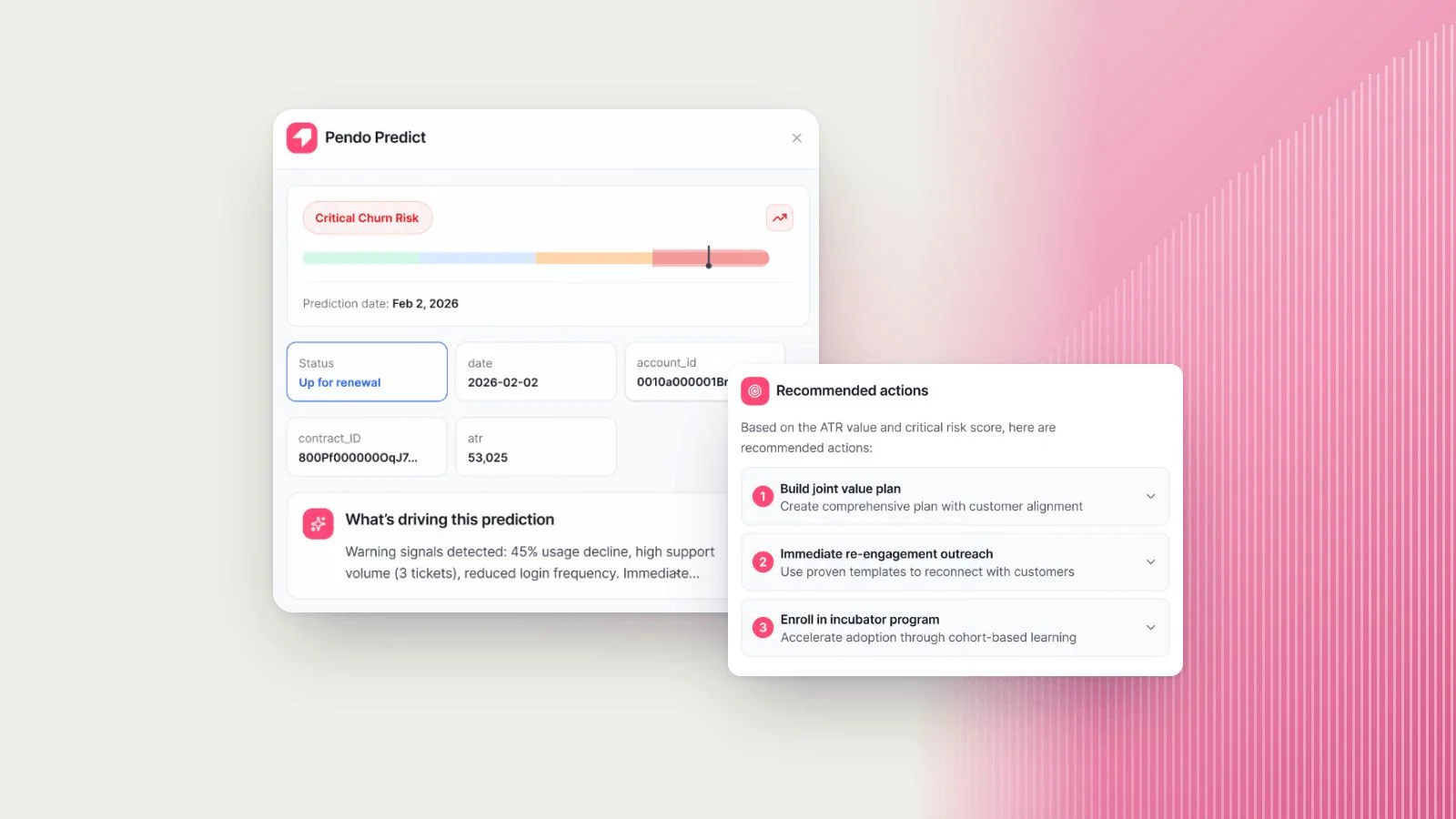
Pendo erfasst diese Verhaltensebene: Frustrationssignale, Workflow-Abschlüsse, Feature-Adoptionsraten, NPS, Stimmung und prädiktive Abwanderungswerte, die auf tatsächlichen Nutzungsmustern basieren. Was wir mit Fin aufgebaut haben, ist die erste native Verbindung zwischen dieser Intelligenz und einem KI-Agenten, der tatsächlich darauf reagieren kann.
So sieht das in der Praxis aus
Drei Szenarien, die heute die größten Kostentreiber für CS- und Support-Teams darstellen:
Ein Nutzer steckt fest, bevor er weiß, dass er feststeckt. Ein Nutzer befindet sich mitten in einem Workflow und beginnt wütend zu klicken. Er hat kein Ticket eingereicht. Er hat nichts in den Chat getippt. Aber Pendo hat bereits Frustrationssignale erkannt – tote Klicks, U-Turns, Zeitanomalien bei einzelnen Schritten. Fin nimmt dieses Signal auf und zeigt im richtigen Moment kontextbezogene Hilfe an: die passende Dokumentation, eine geführte Anleitung oder ein direktes Angebot, den Support zu kontaktieren. Das Ticket, das in 20 Minuten eingereicht worden wäre, wird erst gar nicht erstellt.

Ein gefährdetes Konto beginnt sich zurückzuziehen, bevor es in Ihrem QBR-Deck auftaucht. Die Nutzung eines wichtigen Kontos sinkt über drei Wochen um 35 %. Benutzer melden sich nicht mehr an oder sind nur noch einen Bruchteil der Zeit aktiv, die sie früher verbracht haben. Dennoch hat niemand etwas gesagt. In der alten Welt würde ein CSM dies in einem monatlichen Review bemerken, eine E-Mail senden und das Beste hoffen. Mit Pendo und Fin wird dieses Konto proaktiv als gefährdet markiert, und Fin löst dann eine personalisierte Reaktivierungssequenz aus – ein Check-in, ein „Das könnte Ihnen entgehen", eine Aufforderung, einen Termin mit dem Team zu vereinbaren. Proaktives Handeln, Wochen früher, als ein Mensch es bemerkt hätte.

Ein Power-User stößt genau dann an seine Grenzen, wenn das Gespräch stattfinden sollte. Ein Nutzer hat in diesem Monat 47 Dateien exportiert. Das Limit seines Tarifs liegt bei 50. Außerdem hat er in den letzten zwei Wochen Zeit damit verbracht, Funktionen zu erkunden, die sich hinter einer Paywall befinden. Pendo erkennt beide Signale. Fin initiiert ein zeitnahes, unaufdringliches Gespräch darüber, was im nächsten Tarif verfügbar ist. Anstatt auf den traditionellen pauschalen E-Mail-Versand zu setzen, haben Sie jetzt kontextbezogene Nachrichten direkt im Produkt – genau in dem Moment, in dem ein Nutzer am ehesten darauf reagiert.
Die Daten hinter der Entscheidung
Wir mussten nicht erst überlegen, wie wir unsere Produkte zusammenführen könnten. Wir haben das entwickelt, weil die bereits vorhandenen Daten das Problem unübersehbar gemacht haben.
Als wir Pendo-Accounts, die abgewandert sind, mit solchen verglichen, die verlängert und ausgebaut haben, waren die Verhaltenssignale konsistent und vorhersehbar:
- Abnehmende Funktionsbreite
- Abbrüche an bestimmten Workflow-Schritten
- Geringere Sitzungshäufigkeit
- Zunehmende Frustrationssignale
- Sinkende Stimmung und niedrige NPS-Werte
Die Daten waren die ganze Zeit vorhanden. Jetzt gibt es ein automatisiertes System, das diese Erkenntnisse mit Ihrer Aktivierungsebene verbindet.
Die Teams, für die wir das entwickelt haben
Kundensupport- und Upsell-Maßnahmen mit produktbezogenen Verhaltensdaten zu verknüpfen, war bisher wirklich schwierig – bis jetzt. Durch die Partnerschaft mit Fin haben wir neue Anwendungsfälle für reale Workflows erschlossen:
Customer-Success-Teams verbringen zu viel Zeit mit reaktivem Krisenmanagement und zu wenig Zeit mit strategischen Accounts. Die Integration übernimmt automatisch die hochvolumigen, zeitkritischen Eingriffe, sodass sich CSMs auf die Beziehungen konzentrieren können, die tatsächlich einen Menschen erfordern.
Support-Leiter, die CSAT und Deflektionsraten verbessern möchten, ohne zusätzliches Personal einzustellen. Kontextbezogener, proaktiver Support – noch vor dem Ticket – ist die wirkungsvollste verfügbare Deflektionsstrategie.
Produkt- und Growth-Teams, die bereits wissen, wo Nutzer Schwierigkeiten haben (weil Pendo es ihnen sagt), aber bisher keine direkte Möglichkeit hatten, in Echtzeit einzugreifen. Jetzt schon.
Erste Schritte
Die Integration befindet sich jetzt in der Beta-Phase und steht Kunden auf beiden Plattformen zum Testen zur Verfügung.
Wenn Sie Interesse haben, loszulegen, füllen Sie das Formular aus, um uns zu informieren, und wir melden uns bei Ihnen.
Die Pendo × Fin-Integration basiert auf Pendo's MCP (Model Context Protocol), das Pendos Verhaltens-Intelligence direkt mit KI-Tools und -Agenten verbindet. Erfahren Sie mehr über Pendo MCP.