More conversations about AI, the future of product, and OK Go than we could count, and more energy than we knew what to do with.
If you were with us at Pendomonium 2026, you already know. But if you weren't (or just want to relive it), here's your lookback at the product festival of the year.

Day 0: Community Day, Leadership Summit, and hands-on workshops
This year, we kicked Pendomonium off a day early, March 24th, with tactical workshops, a Leadership Summit, and Community Day: spaces carved out for Pendo Admins and executives to connect, learn, and dig into what's next for product teams.
Liz Feller, IT Manager in Product Design at Nelnet Business Services, longtime Pendo advocate, and admin rockstar, opened the day with a simple but powerful message: listen actively, commit fully, and lead with Pendo, not just use it.
Morning sessions covered the core of what Pendo admins live every day: admin playbooks, governance, and scaling with lean teams.
The day closed with our annual customer awards: a dedicated moment to recognize teams that went beyond implementation and drove real, measurable outcomes. Explore 2026 award winners.

Day 1: Everyone is becoming a builder
By the first full day of Pendomonium, the conversation shifted from connection to transformation. The headline idea was simple yet powerful: everyone is becoming a builder.
Opening Keynote: The reinvention of Pendo, customer wins, and going back to building
Todd Olson, Pendo CEO and co-founder, opened the event with his opening keynote. and then got into it: eleven launches across the platform, each one aimed at closing the gap between product insight and action.
Here’s some of what we announced:
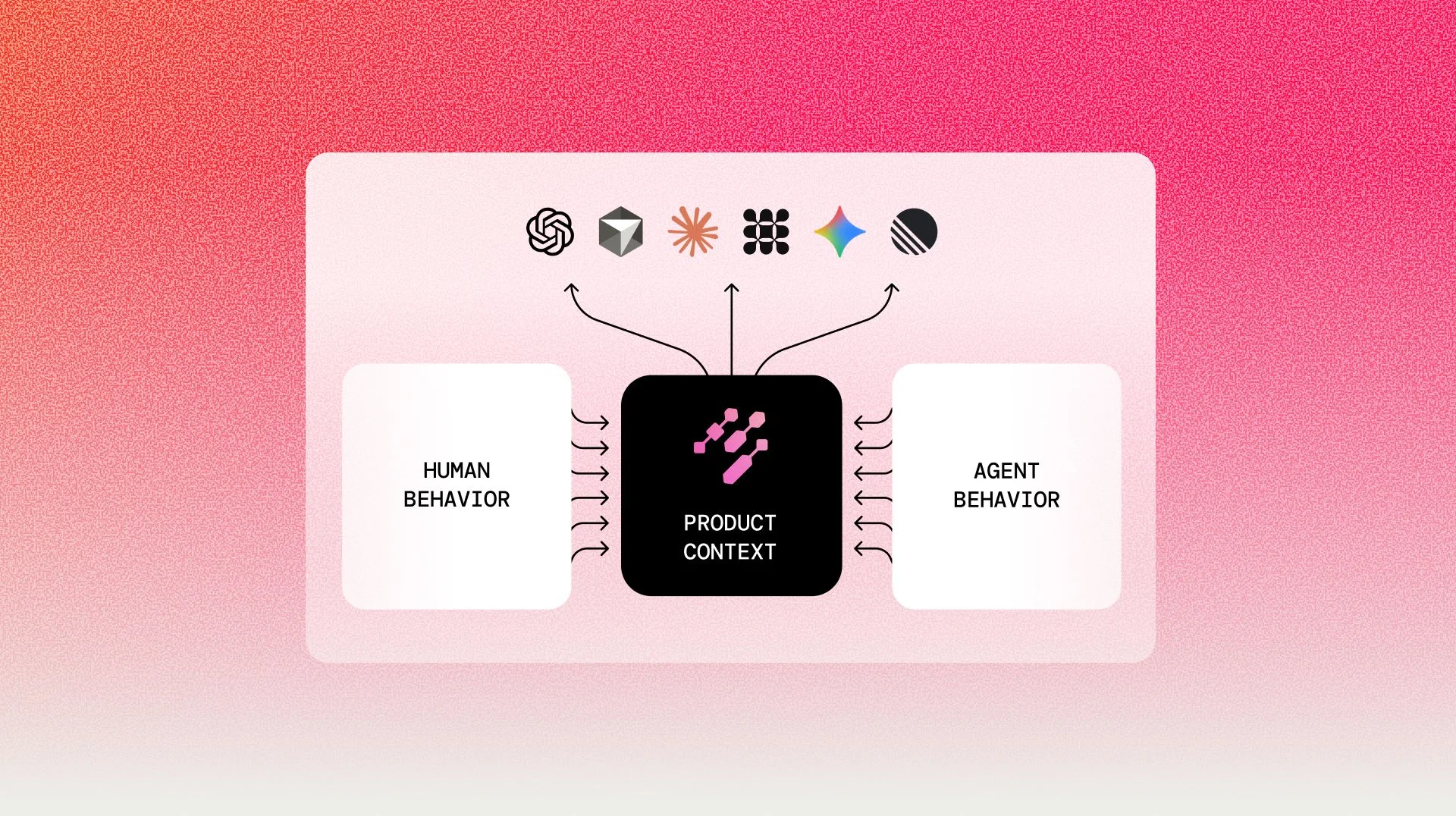
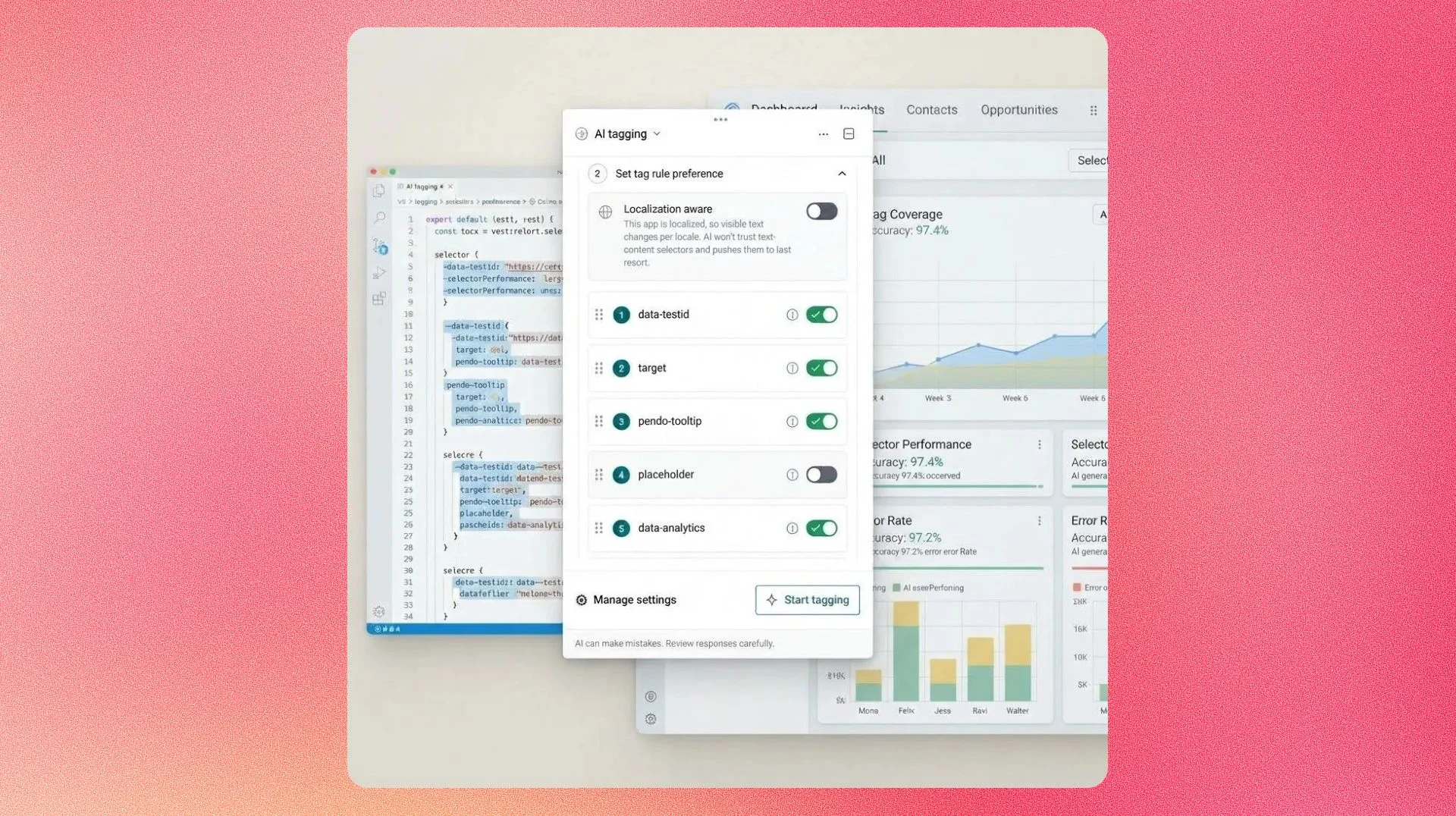
- Novus, the product agent that lives in your codebase, watches how users actually experience your product, and acts on what it finds. This is the future of product management, designed for AI-native builders.
- New Pendo MCP connections with Intercom, Planview, and Minoa for autonomous churn prevention, upsell, and cross-sell.
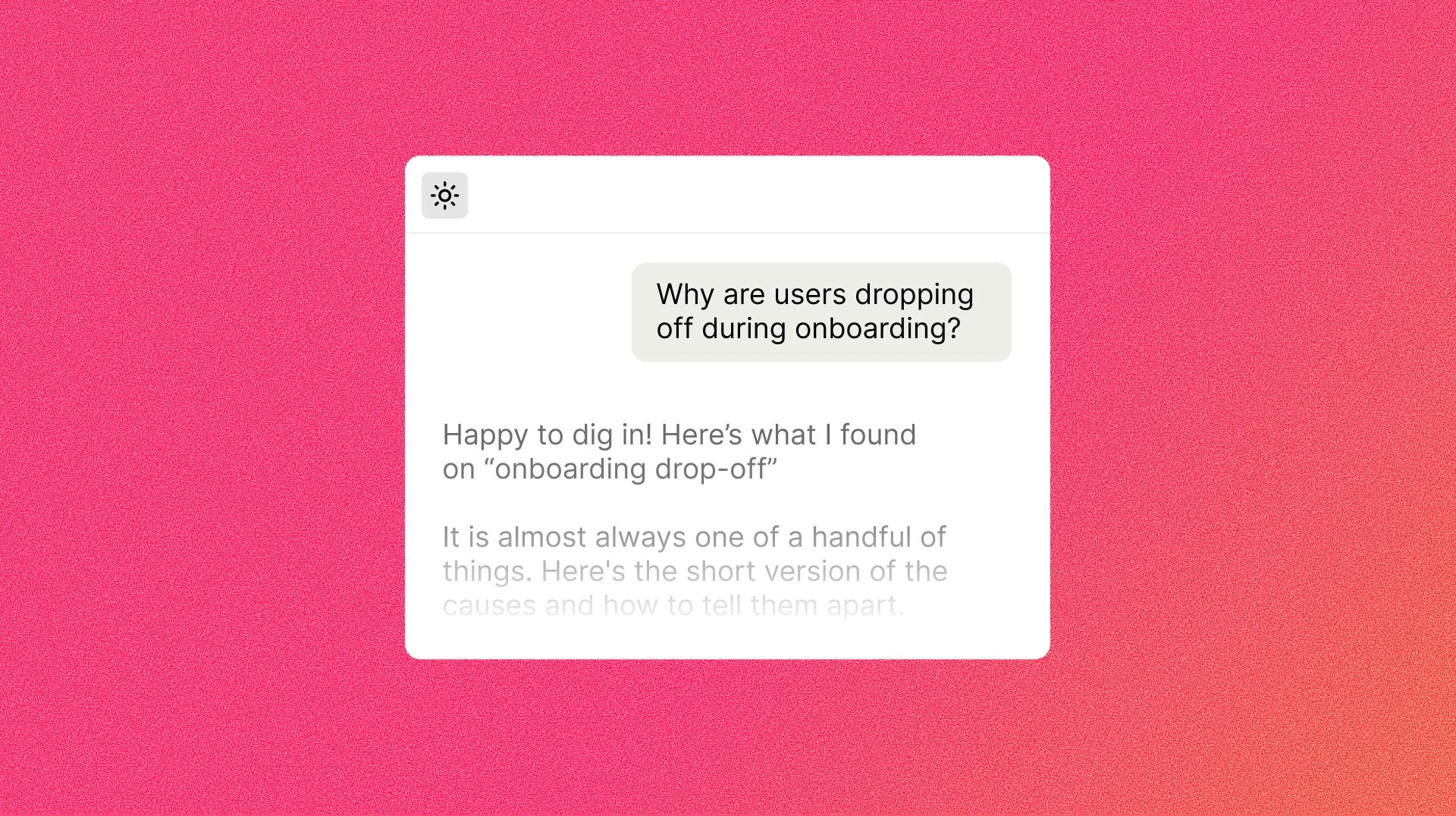
- Leo, your intelligence layer across Pendo. Ask questions about analytics and accounts, build guides conversationally, and get Signals directly in your workflow.
- Predict capabilities that build predictive segments and get suggested actions tailored to your specific playbook.
- AI Resource Center Guides that give users personalized, in-app support.
- Command Center, one dashboard to help IT teams manage software spend, adoption, and risk across your portfolio.
The opening keynote was also marked by real-world successes from our customers. Emburse shared their Pendo Predict story, RF-Smart shared how they’re using Agent Analytics to debug and improve agents, and Planview came on stage to talk about how they’re using Pendo—and about our new MCP partnership.
“The AI you work with today is not the AI you worked with six months ago.”
- Kevin Gaul, Senior Director of Product @ RF-Smart

Todd closed on the question, “How do we get better at product?” Focus on the fundamentals: make your product like a Birkin Bag. You want it to last forever and focus on every single stitch.
We announced the Founders Award and User of the Year recipients
As is Pendo tradition, there are 2 special awards we give attention to outside of our awards ceremony on Day 0. Check out the full list of winners here.
- Founders award goes to Cox Automotive. They used Pendo in mission-critical areas across the entire Cox Automotive and Dealer.com platform. Feature adoption went up 50%, dramatically improved support ticket volume, and migrated dealers from one platform to another. They also had a hand in shaping the development of agent mode as it evolved into Leo, directly influencing the roadmap and product you use every day.
- User of the Year goes to Nicholas Querci @ Nasdaq. We look at actual product usage when we select who wins this award—and Nick has used Pendo nearly every day over the past year. Congrats, Nicholas!
A conversation about MCP with Atlassian, Miro, Cohley, and ThoughtSpot
Pendo’s CPO and co-founder, Rahul Jain, was joined by Francois Lopitaux (SVP, Product Management @ ThoughtSpot), Kosta Bolgov (Group Product Manager @ Miro), Gunjan Sood (Head of AI Products @ Atlassian), and Michelle Green (Director of Product @ Cohley).

Closing keynote: How Builder.io builds with CEO and co-founder Builder.io
To close out the first full day of Pendomonium 2026, AI disruptor Builder.io’s co-founder and CEO Steve Sewell walked us through how they build. AI means more than just doing the same things, faster, and Builder.io is using that to reinvent how they work and ship code.

They’re optimziing for meaningful feedback by shipping work that doesn’t just sound great but also works great (i.e., how your customers need), driving a 3x increase in shipping code. Let’s build like Steve!
Day 2: Re-focusing on the fundamentals
After a full day of exploring what’s possible with AI, Day two brought the conversation back to what matters. In a world where anyone can build, the teams that stand out are the ones that stay grounded in the basics: understanding their users, measuring what matters, and building with intention.
Building an AI agent that actually works with Quorum
Melissa Wood, Sr. PM at Quorum, oversees AI strategy and product operations across their suite of Products.
They launched AI assistant Quincy last year to retrieve data and provide insights for gov’t affairs professionals, answering questions like “Help prep me for this meeting with a law maker.” Apart from being time consuming, their old way of measuring agents had issues. Agentic performance wasn’t contextualized within the rest of data, they couldn’t see emerging issues, and they had to manually read through each conversation. To fix this, they began using Pendo’s AI measurement tool:
“Agent Analytics solved most of our problems. It was easy to set up, my segments and filters carried over, and I could instantly see themes and issues in real-time,” Melissa described. “I can also map out what users do before interacting with our chat, and after. Did they go and use the content after the chat? What led them to the chat, in the first place?”.
With all of this insight, Melissa shared three core insights with the crowd:
- Automated, informative reporting is key. For most of us, building your first AI feature and agent is high-visibility to leadership because it’s a big investment. Ensuring that you can report quickly on how it’s doing will help you get buy-in.
- Tracking agent usage is different from traditional product analytics. It’s not just about clicks and conversions. To truly understand your user experience, you need to see the full input and output of an agent interaction: before-and-after behavior, conversations, and more.
Sessions focused on how to drive adoption, reduce churn, and turn product insights into action. Teams shared how they’re using analytics and feedback to guide decisions. And how they’re building systems that scale, without losing sight of the customer experience.
Kicking off the morning with Christian Idiodi @ SVPG
Christian Idiodi, Partner and Author @ Silicon Valley Product Group (SVPG), started the day with a familiar narrative: your product goes down overnight, and you wake up to a firesail of problems.
“We told ourselves that we’ve become more sophisticated and predictable by using technology. But ask yourself: are you working on something that you made happen, or something that happened to you?”
The difference between reactive work vs proactive lies in our ability to leverage technology.
Today, technology is the basis of every aspect of our lives. It’s what we reach for to answer questions and solve our problems. “Companies must treat technology as their business to survive,” he said.
Closing keynote with Ronnie Chatterji, Chief Economist @ OpenAI
OpenAI Chief Economist Dr. Aaron Chatterji challenged the audience to stop waiting for 100% AI adoption and start paying attention to the power users already pulling ahead. His core argument: it's not about how many people are using AI, it's about how intensively.
Every three months, he noted, the most advanced users get access to more powerful models, compounding their advantage over everyone else. He called this the "intelligence divide" — and said it's more important to watch than any headline adoption number.
On the future of work, he was measured but clear: "We're more likely to see changes in the type of work we do than the elimination of entire categories of jobs, but taste and judgment are going to be really important, because execution is getting faster and a lot of people can now execute." The takeaway for product leaders in the room: figure out what only you can decide, and get there faster.

Pendopalooza: Closing out the night with OK Go
At the end of every Pendomonium, we wrap up the week with Pendopalooza: the biggest, pankest, boldest party of the year. Not only did OK Go lead singer Damian Kulash participate in a fireside chat during lunch, but the band also rocked out with attendees into the night.
For those of you that attended, we hope you enjoyed Pendomonium. For those of you that couldn’t make it—we missed you, and we’ll see you next year.
Stay tuned: we're adding session content and videos soon!