Table of Contents
What is digital adoption?
Digital adoption is the process by which users learn to leverage new technology (software products, apps, websites, etc.) to its fullest potential and derive maximum value from a digital process or solution.
Digital adoption is human-centric, focusing as much on those who use the technology as much as the technology itself. It aims to increase productivity, improve user experiences, and optimize software. A successful digital adoption strategy sits at the intersection of these three pillars and culminates in an effective, mature digital workplace.

Why is digital adoption important?
In today’s rapidly evolving digital landscape, embracing new technologies and processes is no longer optional. It’s essential for business survival and growth. Consider the consequences to organizations without digital adoption.
- Digital disruption continues across every industry, but companies risk falling behind competitors with digital adoption strategies that allow them to improve efficiency, enhance customer experiences, and gain a competitive edge.
- Companies with low digital maturity experience a significant productivity gap compared to their more digitally advanced counterparts, translating to lost revenue and missed opportunities.
- Without the skills or support to effectively utilize new technologies, employees experience frustration and disengagement — leading to higher turnover rates.
- And since digital technologies are constantly evolving, companies that struggle with digital adoption miss out on the chance to leverage these advancements for innovation, product development, and improved customer service.
According to a 2021 report from Harvard Business Review Analytic Services sponsored by Pendo, 89% of executives say that driving the adoption of employee-facing software is a priority, but only 30% say their organization is highly effective at doing it. The other 70% risk:
- Increased operational costs due to inefficient workflows and manual processes
- Loss of market share to competitors who actively leverage technology to boost sales
- Employee disengagement and attrition due to outdated tools and lack of training
- Reduced agility and innovation, without which they cannot adapt to a fast-changing landscape.
To mitigate these risks and unlock a path to sustainable growth and success, companies must ensure the digital tools they procure are adopted by their users, whether those users are their employees or customers.
What are the main categories?
Most digital adoption initiatives will fall into one of two categories:
Customer-facing digital adoption
Customer-facing focuses on driving user engagement with customer-facing products or applications. Its goals include higher user satisfaction, increased product usage, and, ultimately, customer retention. For example, when launching a new mobile app or software features, customer-facing strategies ensure users can easily navigate the app or understand how to discover and use the latest features, thereby embracing them.
Employee-facing digital adoption
Employee-facing digital adoption focuses on ensuring employees understand and effectively use internal software and tools to improve workflows, boost productivity, and achieve business goals faster and with less friction. For example, when deploying a new ERP system, an employee-facing strategy should make onboarding employees to the new platform as painless as possible.
What are the benefits of digital adoption?
One of the most obvious benefits of digital adoption is increased ROI for the technology your company builds or buys. However, the successful adoption of digital tools goes beyond that and generates positive impacts across the entire business.
Digital adoption is also about empowering your workforce to leverage these tools effectively, transforming how your business operates and interacts with customers. When users (whether customers, employees, or both) maximize the value of their technology, they are happier, more productive, and more likely to remain users. Here are some of the most common benefits of:
- Improved workflows and internal efficiency — Imagine using a new project management tool to streamline team communication and collaboration, allowing for real-time updates, task delegation, and centralized file storage. This tool can eliminate lengthy email chains, scattered documents, misunderstandings, and errors, leading to faster completion of projects.
- Increased productivity — Adopting digital tools can automate repetitive tasks, freeing valuable employee time for more strategic work. For example, automated marketing campaigns or data entry tools can significantly reduce the time spent on mundane activities, allowing employees to focus on tasks that require creativity and critical thinking.
- Less user frustration with technology — Struggling users can quickly become overwhelmed and abandon new systems, hindering adoption and ROI. Digital adoption strategies like clear guides and in-app support minimize frustration and encourage continued engagement.
- Higher customer and employee satisfaction — Customers who can easily use a product or service are more likely to be satisfied and loyal. And empowered employees who can use a technology effectively experience greater job satisfaction and contribute more to the company.
- Reduced costs — Extensive training, errors, and rework can significantly increase operational costs. Digital adoption helps companies maximize their technology investments by minimizing training needs, streamlining processes, and reducing errors.
- Data-driven decision-making — Digital tools generate vast amounts of data on customer behavior, operational performance, and market trends. By leveraging analytics platforms, businesses can gain valuable insights to inform strategic decision-making and identify areas for improvement.
What’s the difference between digital adoption and digital transformation?
While “digital adoption” and “digital transformation” are often used interchangeably, there’s a critical distinction between them.
- Digital adoption refers to successfully integrating and utilizing new digital technologies within an organization. It ensures users (customers or employees) embrace and effectively use the latest tools and processes.
- Digital transformation is a much broader concept that encompasses the complete overhaul of an organization’s operations, culture, and business model to leverage the power of software and other digital technologies. It involves not just adopting new tools but also reimagining and optimizing how work gets done.
| Digital Transformation | Digital Adoption | |
|---|---|---|
| What it is | The organizational strategy to redesign business processes using technology | The user-level execution of that strategy — getting people to actually use the tools |
| Who drives it | C-suite and executive leadership | IT, customer success, and L&D teams |
| What it measures | Strategic milestones, market position, business model change | Feature adoption rates, time-to-value, DAU/MAU, support ticket volume |
| What it looks like when it fails | Failed digital initiatives, cost overruns, abandoned tools | Low feature usage, high churn, expensive retraining cycles |
| Timeframe | Multi-year strategic programs | Weeks to months per initiative |
What role does digital adoption play in digital transformation?
- In a company where employees successfully adopt workplace software, digital transformation efforts are much likelier to succeed. Successful digital transformation, among other elements, means employees become confident and empowered to use the digital tools to help them thrive in the workplace. It’s also a process in which employees become a part of the change itself, providing business technology and ops managers with critical feedback and demonstrating new and better ways of working that can inform how they plan digital change for the better going forward.
Digital adoption examples
SaaS product onboarding
A B2B SaaS company uses in-app walkthroughs to guide new users through core features during their first session. Contextual tooltips appear as users navigate, replacing one-time email sequences. The result: users reach their first "aha moment" faster, and activation rates improve without any additional headcount.
Enterprise ERP rollout
A manufacturing company deploys in-app guidance directly inside a new ERP system. Step-by-step walkthroughs replace 40-page training manuals. Help desk tickets drop within the first month as employees navigate the platform independently.
Customer-Facing Mobile App
A financial services company uses behavioral analytics to identify which features have high discovery rates but low usage. They add contextual tips to bridge the gap. Feature adoption increases measurably within 60 days — without a product redesign.
CRM adoption after a platform migration
sales organization struggles after migrating CRM platforms. Session replay data reveals exactly where reps abandon workflows. Product teams address those specific friction points with targeted in-app guidance. Active CRM usage increases, and data hygiene improves as a side effect.
How can I increase digital adoption?
- In addition to ensuring a product is as intuitive as possible, there are specific strategies to help increase digital adoption across a company’s user base:
- Onboarding: By creating an effective onboarding strategy, companies can ensure users — employees or customers — become proficient in an application as quickly as possible and recognize its value, driving retention and preventing churn. For example, you can provide:Tailored experiences: Create different onboarding experiences for new users based on their roles and needs.
- Interactive tutorials: Go beyond static text instructions and provide interactive tutorials, walkthroughs, or short videos to guide users through key features.
- Clear value proposition: Communicate the value proposition of the software app and how it benefits users in their daily tasks.
- Measurable outcomes: Track key metrics during onboarding, such as time to complete tasks, to identify areas for improvement.
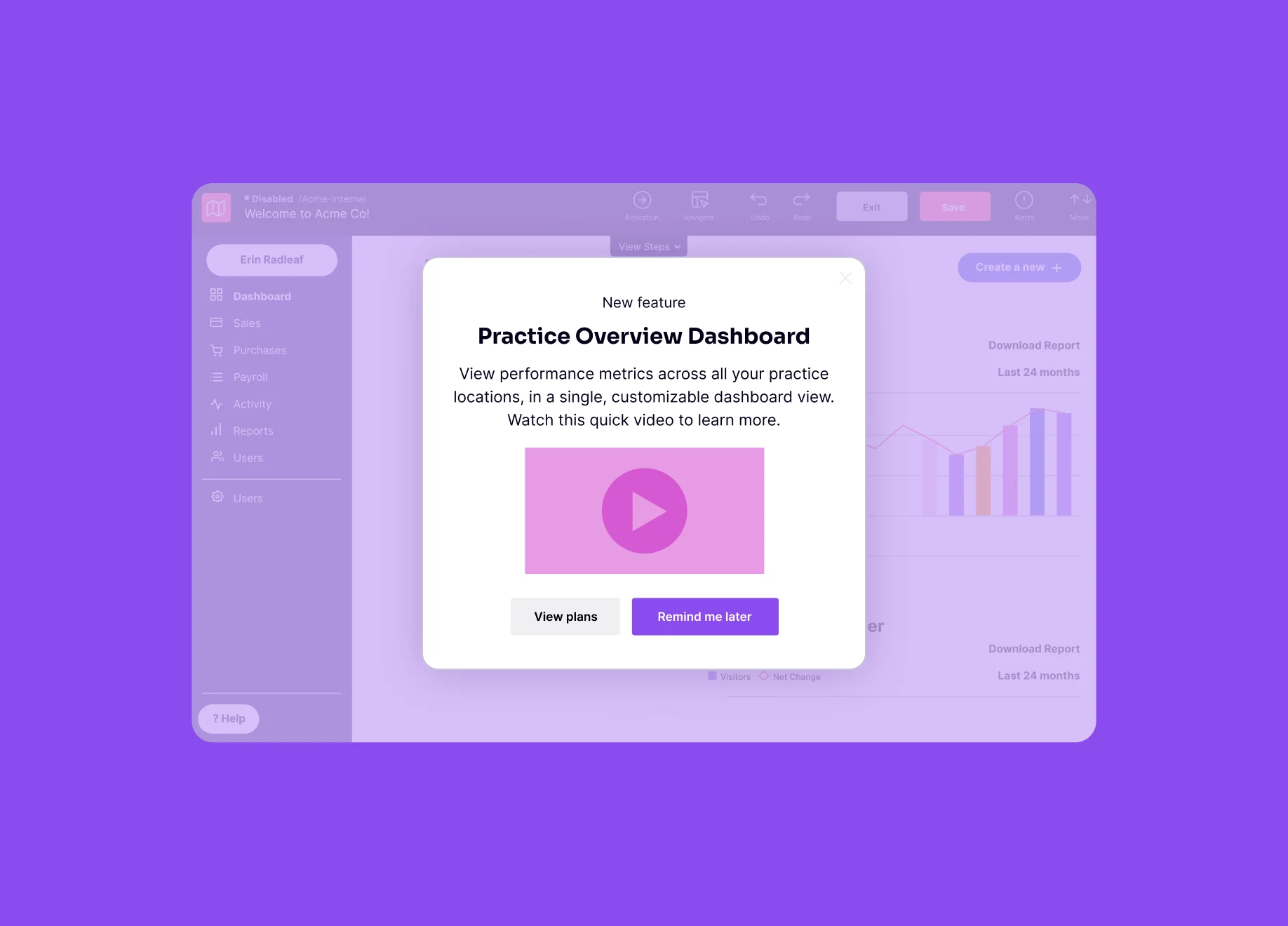
- In-app guidance: Beyond onboarding, users need contextual information while using the product. Many companies use in-app messaging to communicate at the right moments and guide users to success. Cartegraph uses in-app messages to drive behaviors in their app that lead crews to complete fieldwork more efficiently. Six months after launching these guides in their mobile app, the team saw a 62% increase in mobile adoption. Other helpful features might include:Contextual walkthroughs: Trigger short, interactive walkthroughs based on user actions or specific features the user is accessing.
- Tooltips and cheat sheets: Offer quick, contextual tooltips and cheat sheets that provide easy-to-access reminders and guidance within the application.
- Search functionality: Implement a robust search function within the app to allow users to find answers to their questions quickly and efficiently.
- Ongoing education: Since digital adoption is a continuous process, it’s vital to keep users engaged and informed with ongoing educational resources after onboarding is complete, especially when there are any product releases, changes, or updates. Some tactics include:Regular webinars and training sessions: Host regular webinars or training sessions to highlight new features, address common questions, and showcase best practices.
- Knowledge base and user guides: Develop a comprehensive knowledge base and user guides that provide easy-to-find documentation and resources for ongoing reference.
- Change management communication: Communicate product updates, changes, or new features through multiple channels to ensure users are aware of ongoing improvements.
- Many companies are turning to digital adoption platforms to implement these practices effectively. These platforms can help automate tasks, personalize the user experience, and track progress toward digital adoption goals.
How can I measure digital adoption?
- Digital adoption of internal software is typically measured by increased employee productivity, whereas customer-facing digital products are measured against various business KPIs and, for sophisticated organizations, product experience targets.
Key metrics for measuring digital adoption
| Metric | What it measures | Best for |
|---|---|---|
| Feature adoption rate | % of users engaging with a specific feature | Product & CS teams tracking rollout success |
| Time to value (TTV) | How long until a new user completes their first meaningful action | Onboarding optimization |
| DAU / MAU ratio | Stickiness — how frequently users return relative to monthly actives | Engagement depth |
| Task Completion Rate | % of users who successfully complete a target workflow | UX and in-app guidance effectiveness |
| Support Ticket Volume | Volume of help requests tied to a specific feature or workflow | Friction identification |
| NPS by usage Segment | Satisfaction scores correlated with depth of product usage | Proving adoption drives retention |
| License utilization | % of purchased seats actively used | Procurement and renewal conversations |
| Guide engagement rate | % of users who interact with in-app walkthroughs or tooltips | Adoption intervention effectiveness |
How Pendo drives digital adoption
Understanding adoption is one thing. Actually moving the needle on it requires seeing what's happening inside your product and being able to act on it — in the moment, for the right user, at the right time. Here's how Pendo approaches each stage of the adoption journey:
See where adoption breaks down: Pendo Analytics
You can't improve what you can't see. Pendo's behavioral analytics surface which features are being used, which are being ignored, and exactly where users drop off — without requiring engineering resources. Path analysis and funnel reports show you the specific moments where adoption stalls, so you're optimizing based on evidence, not assumptions.
Close the gap in real time: Pendo Guides
Knowing where users struggle is only half the battle. Pendo Guides let you deliver in-app walkthroughs, tooltips, and announcements at the exact moment a user needs them — triggered by their behavior, not a calendar. Unlike email onboarding or help documentation, guides appear contextually inside the product, when users are already trying to do the thing you want them to do.
Understand the why behind the data: Pendo Session Replay
Analytics tell you what happened. Session Replay shows you why. Watching real user sessions surfaces the confusion, misclicks, and friction that behavioral data alone can't explain — giving your team the qualitative context to make smarter decisions about where guidance or product changes will have the most impact.
Get ahead of disengagement: Pendo Predict
Pendo Predict uses machine learning and AI to identify users showing early signs of disengagement before they churn. Instead of reacting to lost users, teams can intervene proactively with a targeted guide, a well-timed outreach, or a product change informed by the signals already in the data.
Where can I learn more about digital adoption?
- For those looking to dig deeper into digital adoption and DAPs, Pendo has published information on how to operationalize driving digital adoption and measure results.
- See how Pendo helps you drive digital adoption
- Explore now