Lanzar un agente de IA ya no es la parte difícil. La verdadera prueba llega después del lanzamiento, cuando alguien pregunta si mejoró un resultado que le importa al negocio.
Ese escrutinio ya está cambiando los planes de implementación empresarial. En el Global AI Pulse Q2 2026 de KPMG, el 49 % de las organizaciones afirmó haber retrasado o reducido sus implementaciones de agentes de IA cuando los costos comenzaron a superar los beneficios.
Una respuesta fluida por sí sola no es prueba de valor. Los equipos necesitan saber qué entendió el agente, qué hizo y si el usuario terminó en una mejor situación. Ahí es donde la mayoría de las implementaciones encuentran problemas. Los agentes pueden conocer la documentación de la empresa y el historial de cuenta del cliente, pero aun así perder de vista la experiencia en tiempo real que se desarrolla dentro del producto.
La capa que falta es el contexto del producto: el registro de comportamiento de lo que hizo un usuario, lo que intentó, dónde se atascó y qué ocurrió después de que el agente intervino.
El contexto del producto cambia el punto de partida
Sin contexto del producto, cada conversación comienza desde cero. El agente espera a que el usuario describa el problema, solicita antecedentes y busca la respuesta más cercana en su base de conocimientos. Eso pone la carga sobre la persona que ya está teniendo dificultades.
Con el contexto del producto, el agente puede ver el camino hacia el problema. Sabe qué página visitó el usuario, qué flujo de trabajo abandonó, si encontró un error y si intentó repetidamente la misma acción. Al combinar esas señales con los datos de CRM y de cuenta, el agente puede responderle a este usuario, en esta cuenta, en este momento—no a una versión genérica de él.
Pendo for Agents pone ese contexto de comportamiento a disposición de los agentes que los equipos crean o adquieren, y luego mide si la intervención del agente cambió el resultado.
Esto genera beneficios concretos en soporte, éxito del cliente y flujos de trabajo de empleados.
Resuelve el problema antes de que se convierta en un ticket
La mayoría de los agentes de soporte son reactivos. Ayudan a los usuarios que saben cómo hacer una pregunta clara, pero se pierden a la persona que hace clic en círculos, escribe un mensaje frustrado y cierra la pestaña.
El contexto del producto le da al agente la oportunidad de comunicarse primero. Señales como clics de rabia, clics en errores, retrocesos, historial de páginas e intentos anteriores pueden activar un mensaje oportuno o un recorrido guiado mientras el usuario aún está trabajando.
Teachable puso este enfoque en práctica al conectar los datos de Pendo con su agente de soporte Fin, Sunny. Pendo identificó momentos de dificultad y le pasó el contexto relevante a Sunny, quien podía iniciar la conversación con una oferta de ayuda específica. Las conversaciones iniciadas por Pendo lograron una tasa de resolución del 67 %, y el 86 % de las conversaciones proactivas se resolvieron sin necesidad de abrir un ticket. El equipo de soporte llegó a los usuarios en el momento justo, en lugar de esperar a que la frustración se desbordara hacia la cola de atención.
Detecta el riesgo de cancelación con tiempo suficiente para actuar
Los equipos de éxito del cliente enfrentan un problema relacionado. Los datos del CRM pueden confirmar que una cuenta está en riesgo, pero a menudo después de que el comportamiento ya ha cambiado. Las señales más tempranas están en el producto: un flujo de trabajo clave no se usa, la adopción se reduce a una sola persona o un equipo deja de usar la función que motivó la compra.
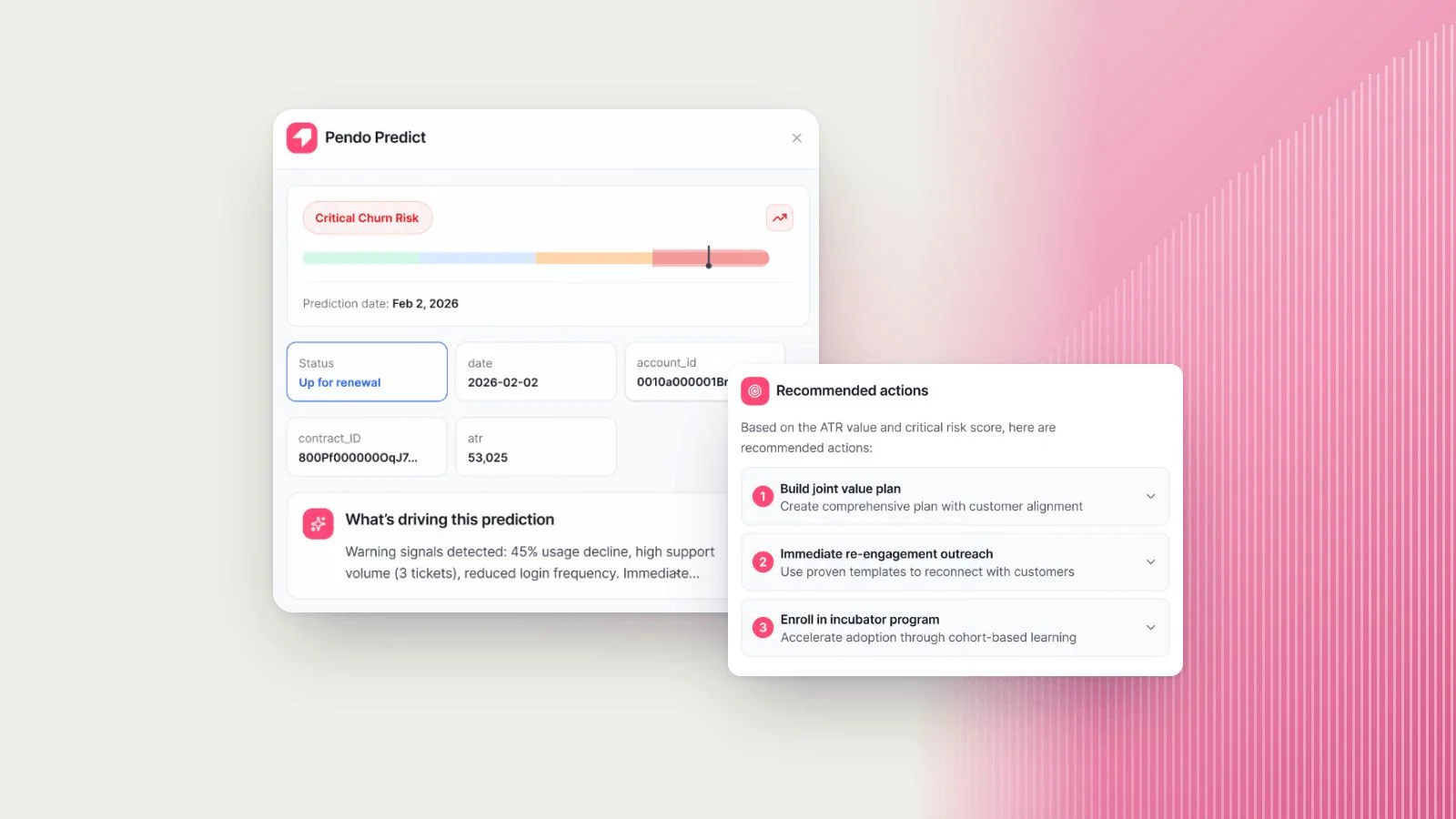
Cuando los datos de uso del producto y los del CRM trabajan juntos, los equipos pueden detectar el riesgo antes y entender por qué está aumentando. Pendo puede mostrar esas señales dentro de las herramientas que los equipos orientados al cliente ya utilizan, y luego conectar la predicción con una intervención humana, un mensaje dirigido o una guía en la aplicación.
Emburse desarrolló un sistema de alerta temprana de cancelación basado en ese principio. La empresa conectó datos que estaban dispersos en cuatro sistemas, amplió su modelo de aproximadamente 20 señales a cerca de 700 predictores y aumentó la cobertura sin incorporar más CSMs. El valor provino de convertir una puntuación de riesgo en una acción concreta.
Coloca agentes donde el trabajo de los empleados se atasca
El mismo patrón se aplica dentro de la empresa. Los agentes internos pueden registrar conversaciones, pero los registros por sí solos no muestran si los empleados completaron la tarea, la abandonaron o siguieron repitiendo el mismo prompt fallido.
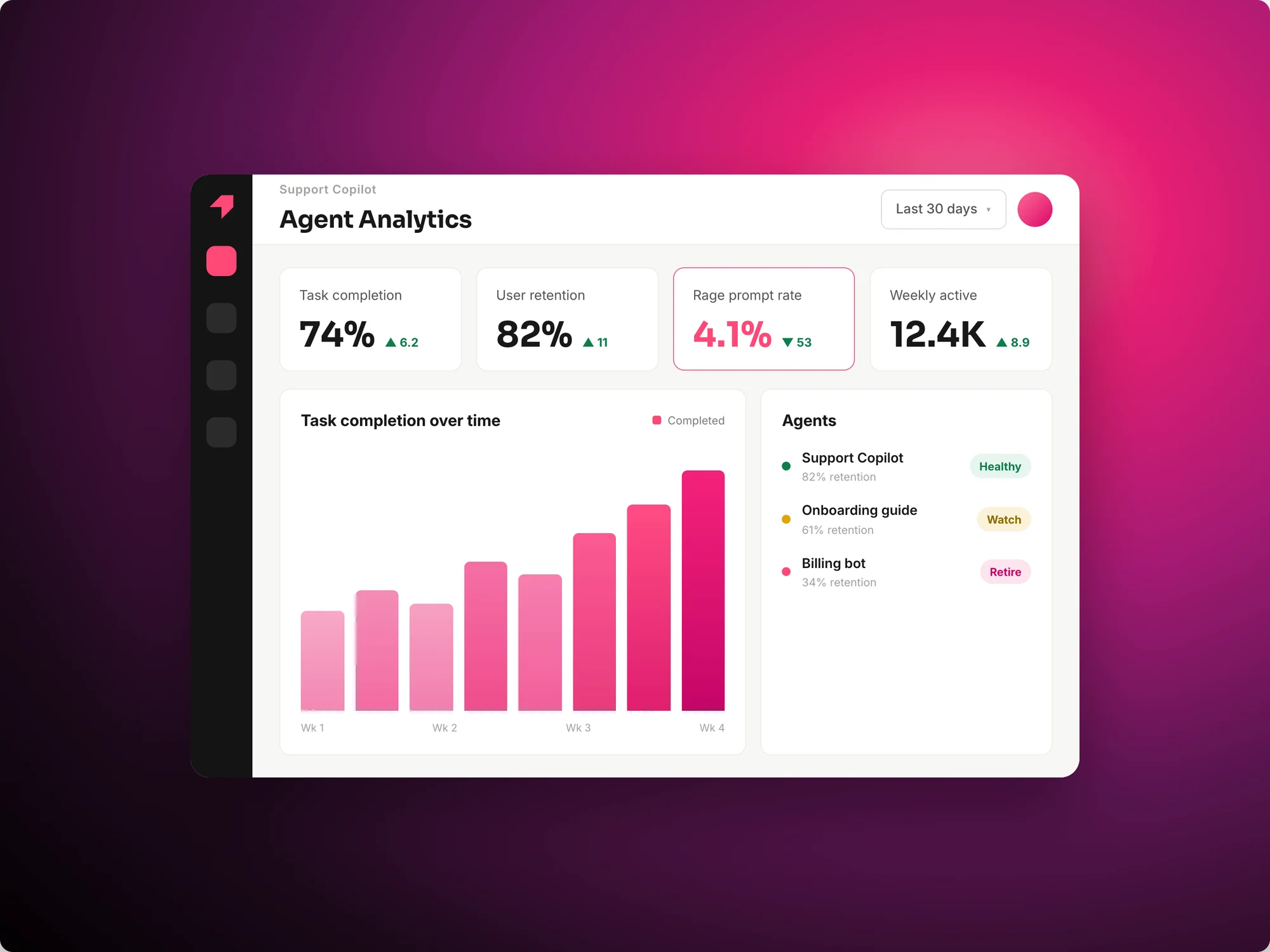
Al conectar las interacciones de los agentes con el comportamiento de los usuarios y los resultados de negocio, los equipos pueden identificar casos de uso de alto valor, detectar fallas y mejorar la experiencia. Ticketmaster utilizó este enfoque para un agente interno y redujo los prompts de frustración en un 53%, mientras que la retención de usuarios alcanzó más del 80%. Agent Analytics convierte esas señales que de otro modo pasarían desapercibidas en evidencia que los equipos pueden usar para decidir dónde mejorar y dónde escalar.
Mide el agente y luego hazlo actuar
En los tres casos de uso, el plan de acción se reduce a dos movimientos. Primero, mide el agente como un producto: quién lo usa, qué le pide que haga, dónde falla y si cambia el resultado. Luego, dale suficiente contexto para actuar en el momento adecuado.
El modelo de un agente determina cómo razona. El contexto del producto determina si ese razonamiento es relevante para la persona que tiene enfrente. Si quieres que un agente supere la revisión de ROI, empieza por ahí.
Pendo for Agents conecta el contexto del producto con cualquier agente que construyas o adquieras, y luego te ayuda a ver qué está funcionando y dónde necesita mejoras. Explora Pendo for Agents.